
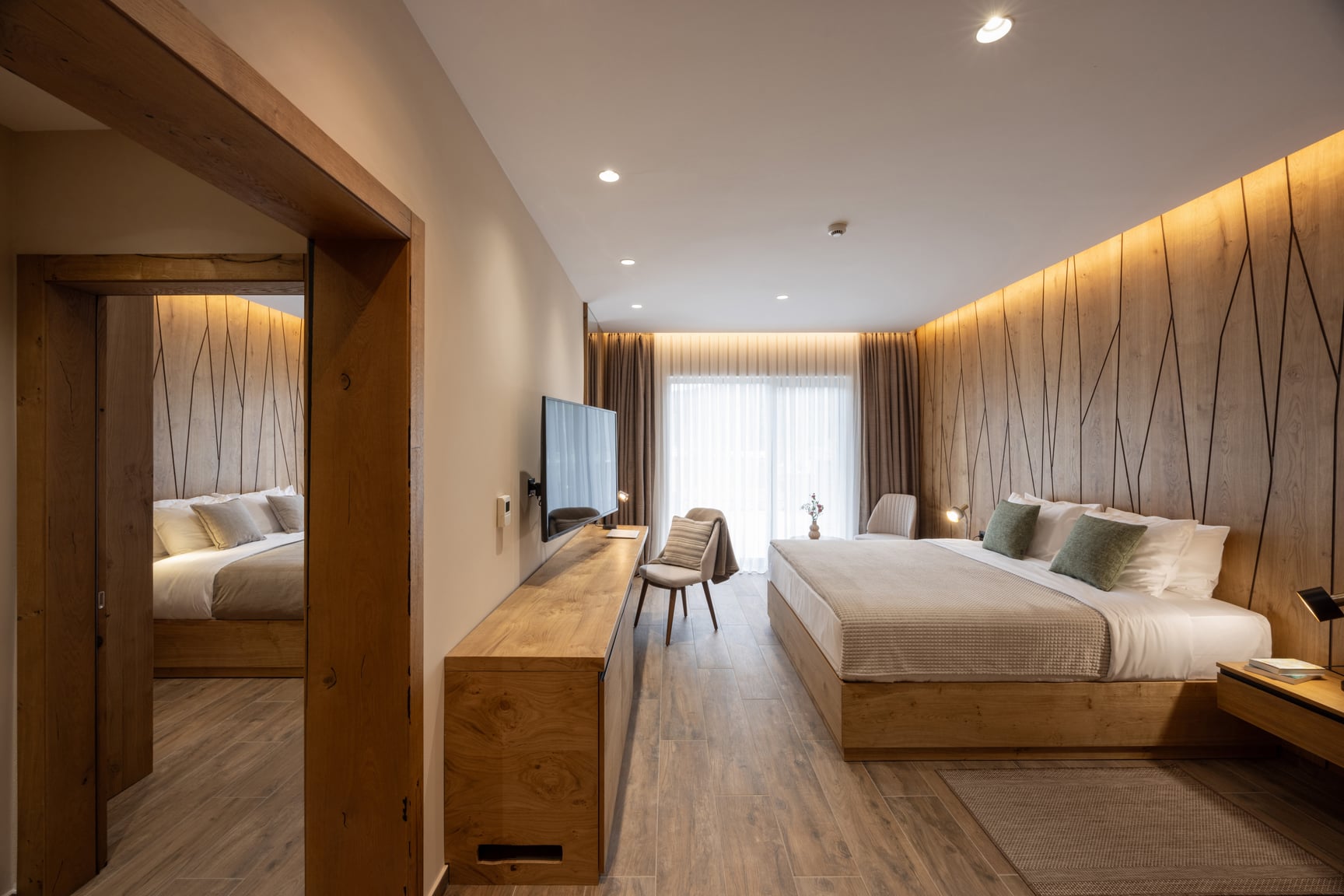
An Oregon hotel owner meets the state’s law in a few places before any policy is chosen. One is the license to operate, which the statutes route through the Oregon Health Authority. Another is the rule about serving alcohol, where the Oregon Liquor and Cannabis Commission licenses the bar and the legislature has written a limit on liability. And there is workers’ compensation, which the Department of Consumer and Business Services oversees and which reaches every subject employer. None of these rules is a policy, but each one tells the program what it has to be ready to answer.
This page reads each rule from the Oregon Revised Statutes, quotes the sentences that matter with a link to the source, and says so plainly where our research stopped short. The hotel insurance page describes the program as a whole. Here the subject is Oregon, and the questions an owner of an independent inn, a franchise property or a lodge asks before buying cover.
What Oregon says about a license to run a hotel
The statute that governs this is ORS 446.320, and its words are direct: “No person shall establish, operate, manage or maintain a tourist facility, without a license from the Director of the Oregon Health Authority” (ORS 446.320). The same chapter defines the term the section uses. A tourist facility is a category that includes a traveler accommodation, and the chapter’s definitions describe that accommodation as an establishment that rents rooms or sleeping facilities to travelers or transients on a daily or weekly basis (the chapter’s definitions). A building that rents rooms by the night reads, on its face, like the thing that definition describes.
We are careful about how far to take that. The record we built from the statutes does not state which lodging the license covers in every case, and the definition above is a general description, not a ruling on your property. Whether your own operation sits inside it, which inspections come with the license, and how a transfer or a change of use is handled are questions for the licensing authority, and they are not confirmed in our research. If you are opening, buying or adding a building, ask the Authority first and keep its answer in writing.
The Authority’s role is also narrower than the word “hotel” suggests. The statute speaks of the Director of the Oregon Health Authority granting the license, which makes it a public-health function. It says nothing we read about a fire marshal, a city business license or a local permit, and so this page does not describe them.
Where the license and the policy meet
A license lets you receive guests. A policy pays when something goes wrong while you do. These documents answer different questions, but they share facts, and a mismatch between them is the kind of thing that surfaces at a bad moment.
Describe the same building the same way in both. If the license is held for a main lodge and the program insures a main lodge, an annex, a cabin cluster and a detached laundry, the annex and the cabins deserve a direct question to both the licensing office and the agent. When the operation changes, with a new pool, an added event barn, a restaurant opened off the lobby or rooms taken out of service for renovation, the license and the property insurance schedule should both hear about it.
Liability questions follow the same pattern. A guest who slips on a wet entry mat after a rainy arrival, a child hurt at the pool gate, a diner made ill by the breakfast buffet or a dispute in the parking lot all land on general liability. The wording of that policy, not the license, decides how each is answered, and the exclusions are worth reading before an incident rather than after.
Serving alcohol at an Oregon hotel: the statute and its conditions
A hotel bar, a lounge off the lobby, a wine list in the dining room or a banquet hall that serves at weddings is a place where the alcohol rules matter. In Oregon, the Oregon Liquor and Cannabis Commission licenses those who serve, and the legislature has written a rule about the liability that follows. ORS 471.565 says: “A person licensed by the Oregon Liquor and Cannabis Commission, person holding a permit issued by the commission or social host is not liable for damages caused by intoxicated patrons or guests unless the plaintiff proves by clear and convincing evidence that” (ORS 471.565).
The conditions that follow are in the saved text and we can quote some of them. The plaintiff must prove that “The licensee, permittee or social host served or provided alcoholic beverages to the patron or guest while the patron or guest was visibly intoxicated”, and that “The plaintiff did not substantially contribute to the intoxication of the patron or guest” (ORS 471.565). The section also treats a claim for damage done by a guest away from the licensed premises differently, saying such an action “may be brought only if the person asserting the claim has given the licensee, permittee or social host the notice required by” a later subsection. We do not summarize the notice periods here, and the full section is the place to read them.
What the statute does not do is excuse a hotel from running its bar well. The conditions turn on facts: whether the guest was visibly intoxicated when served, who supplied or encouraged the drinking, and what the hotel did. The evidence for those facts is a written service policy, trained staff, a log of refusals and clear event contracts. That is the ground liquor liability is written for, read next to the general liability policy, whose own alcohol exclusion is worth a direct question to the agent.
Events add a layer. A caterer or an outside bartender who serves at a function in your ballroom brings its own license and insurance or works under yours, and the event contract is where that is settled. Ask for the caterer’s certificate before the day, and read whether your contract asks the host to carry any cover of their own.
Oregon properties and the places a claim can begin
Hotels in the state do not look alike, and a claim starts differently in each. A coastal hotel faces salt air, wind-driven rain and guests who walk in wet from the beach. A lodge in the mountains has snow load on the roof, ice at the entrance and guests arriving in ski boots. An inn among vineyards runs tastings, weddings and harvest-season crowds with a small staff. A hotel along an interstate corridor runs tight turnarounds, a busy lot and guests who arrive late and leave early. A downtown property shares walls, sidewalks and an elevator with the public.
Each setting points to a different set of questions for the agent. The coastal owner should ask about wind and water damage and about how long rooms can be out of service before income cover responds. The mountain owner should ask about roof loads, frozen pipes and the stairs and walkways that ice over. The vineyard owner should ask how weddings and tastings are covered and who serves the wine. The roadside owner should ask about the lot, lighting and theft from guests’ vehicles. The downtown owner should ask about the shared building and the neighbors’ claims.
The state’s own text does not settle any of this. These are the exposures a hotel carries by being the kind of business it is, and we mention them because a program that reads only the statutes would miss them.
Workers’ compensation for an Oregon hotel’s staff
Oregon’s chapter on workers’ compensation sets a duty that does not depend on the hotel’s size. ORS 656.023 says: “Every employer employing one or more subject workers in the state is subject to this chapter” (ORS 656.023). That puts the line at a single subject worker, so a small family hotel with one housekeeper is inside the chapter’s reach, subject to the question of who counts as a subject worker.
The duty itself is in ORS 656.017: “Every employer subject to this chapter shall maintain assurance with the Director of the Department of Consumer and Business Services that subject workers of the employer and their beneficiaries will receive compensation for compensable injuries as provided by this chapter” (ORS 656.017). The text then says the employer qualifies as a carrier-insured employer or as a self-insured employer. The Department of Consumer and Business Services is the agency the statute names for that assurance. For a hotel, a lapse in coverage is more than an insurance problem. Housekeeping, laundry, maintenance and the night desk all carry injury risks every day.
Some questions we could not close from the text we read. The test for an independent contractor is not confirmed in our research: the chapter excludes independent contractors from the definition of worker, but the test sits in a different section that we did not retrieve. If your hotel uses contract housekeepers, a staffing agency, a valet or a maintenance vendor, ask the agent and the Department how those workers are counted before you assume they sit outside your policy.
We also did not classify the insurer options the chapter names, and that classification is not confirmed in our research. Whether Oregon runs a state workers’ compensation fund is not confirmed in our research. The chapter names a state fund corporation, and the text we read does not state its legal form. We therefore make no claim about whether an Oregon employer must or may buy from a state fund; ask the agent.
Owners have a choice that is easy to miss. ORS 656.128 says that a sole proprietor, a limited liability company member or a partner “may make written application to an insurer to become entitled as a subject worker to compensation benefits” (ORS 656.128). An owner who works the front desk, carries bags or covers a housekeeping shift can weigh that option with the agent, because without it an owner’s own injury at work may sit outside the staff policy. The workers’ compensation page explains how the policy itself works for a hotel staff.
The hotel van, the valet and ORS 806.070
A hotel that runs an airport or station shuttle, a valet stand or a maintenance truck is operating vehicles under the state’s motor vehicle law. Section 806.070 sets a schedule of payments, and a line of it is a limit for injury to more than a single person. The saved text of the section reads: “$50,000 because of bodily injury to or death of two or more persons in any one accident” (ORS 806.070).
We are quoting that line because the record proves it, and we are not presenting it as the complete requirement. The same section sets other limits that this page does not state. Whatever the statute sets is a floor, and a van full of guests is exactly the situation where a floor is not the question. A lender, a franchisor or an event client may ask for more, and the umbrella layer is where that gap is the place to raise it.
A guest hurt while boarding the van under the porte-cochère can raise an auto question and a premises question at once, which is why the commercial auto and general liability policies should be read side by side. Staff who run errands in their own cars raise a separate question. A hired and non-owned auto endorsement answers for the hotel’s liability when an employee’s personal car is used on hotel business, and it is worth asking about even when the hotel owns no vehicle at all.
Weather, smoke and the cost of closed rooms
Weather decides when a hotel is full and when they are shut, and the property side of the program should be read with that in mind. A winter storm that drops a limb on the roof, a burst pipe in an unheated wing, a river that rises into the lower level or a season of wildfire smoke that cancels bookings are all different events, and they are not all treated the same way by a policy.
Ask the agent plain questions. Which of these events does the property form cover, and which are excluded or limited? If rooms close, how is lost income measured, and how long does it run? And if a road closure or an evacuation order keeps guests away without damaging the building, is there any cover at all? The answers differ by policy, and none of them comes from the state’s statutes. They are read from the policy, so read it before the season, not during it.
Keep records that make a claim easier. A dated set of photographs of every room and common area, a current inventory of furniture, linens and kitchen equipment, and the maintenance log for the roof, boiler and plumbing give the adjuster something to work from. Hotels that can show what was there and how it was kept tend to have simpler conversations after a loss than those that cannot.
The six policies, measured against an Oregon hotel
General liability carries the premises claims in this page: the wet entry, the pool, the breakfast room, the lot, and the third-party claims that the alcohol statute leaves open. Property insurance covers the building you own and the furnishings, linens and equipment inside it, with income while rooms are closed as a part to ask about. Workers’ compensation is required of a subject employer, and the owner application is the choice to settle. Commercial auto covers the shuttle and any hotel vehicle. Liquor liability follows the bar, the restaurant and the banquet room. An umbrella adds a layer above the primary policies when a franchise, a lender or the owner wants more.
Contracts that ask for proof of cover
A good part of what an Oregon hotel has to show comes from documents rather than statutes. A franchise agreement may name the coverages, set minimum limits and ask to be named on the policy. A lender will want its interest in the building recorded and the property insured to value. A wedding planner, a tour operator booking a block of rooms or a corporate client may ask for a certificate naming their company before a deposit clears.
Before opening or buying a hotel in Oregon
Put the pieces in order and the Oregon part of the work is short. Ask the Authority how the tourist facility license applies to the building you have in mind, and get the answer in writing. If the hotel will serve alcohol, start with the licensing body and write the service policy before the first night. Put workers’ compensation in place before the first employee starts, decide whether the owners will apply to be covered, and settle how contract and agency workers are counted. Ask the agent for the full current motor vehicle requirement for the shuttle. Then match the certificate to what the franchisor, the lender and the event clients ask for in writing.
If you are buying rather than opening, do not assume the license or the seller’s policies move with the building. The statute speaks of a person who operates the facility, so ask the Authority how a change of operator is handled, and have your own program bound before the closing, because the seller’s policies were written for the seller.
What the Oregon sections above can and cannot tell an owner
Every rule above is quoted from the Oregon Revised Statutes as the legislature publishes them, and every quotation links to its source. Where a question stayed open, the independent-contractor test, the classification of the insurer options, whether a state fund is part of the picture, and how the license applies to a given building, we say it is open rather than fill it in. Laws change, and an agency’s answer to your own facts outranks this page. Check the source before you rely on a detail, and ask us when the insurance side is the question. When an Oregon source we cite changes, this page is reread against it, and the review date at the top moves with that reading.