
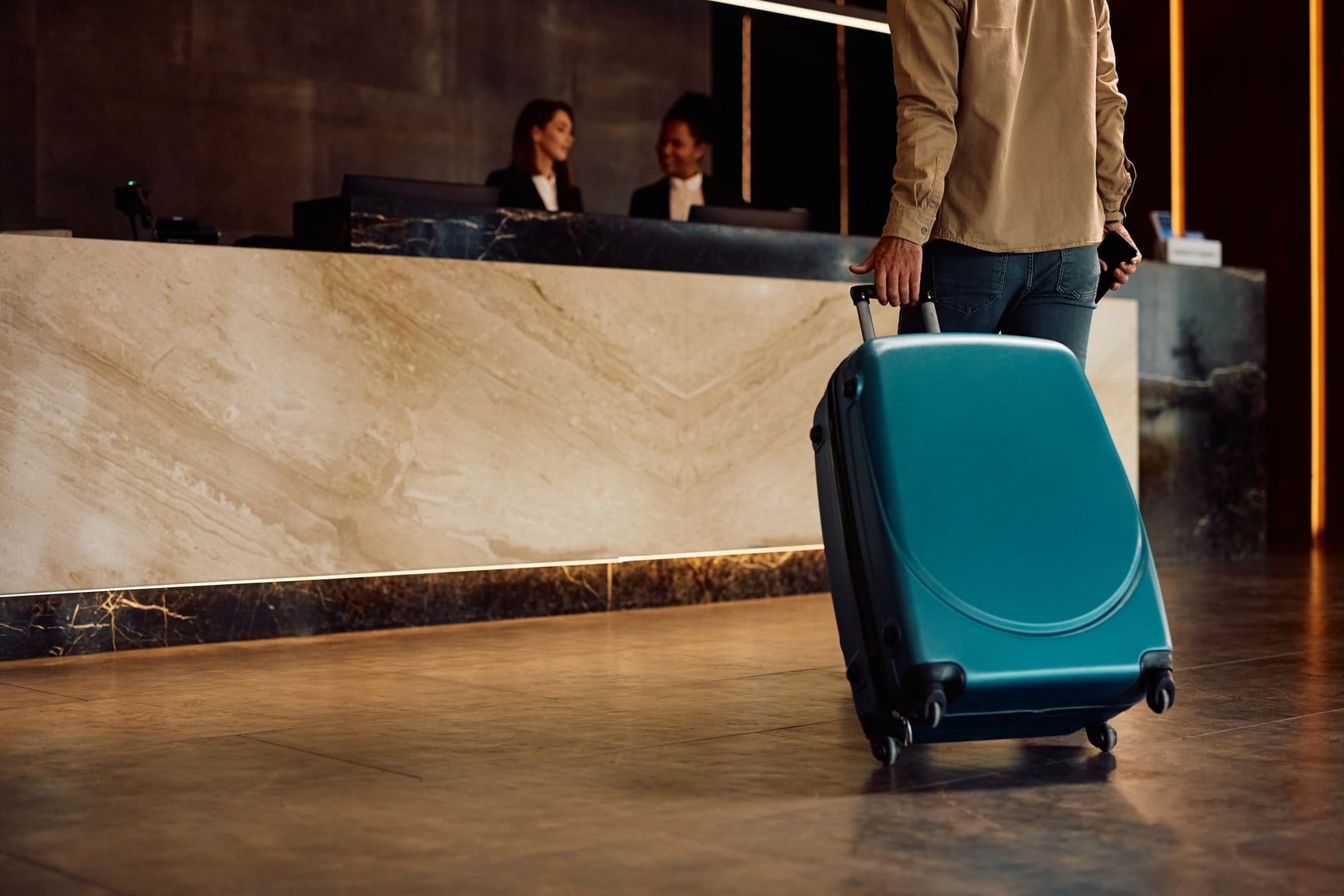
A California hotel owner can fairly ask which state rules shape the insurance program, and this page has to begin with an honest limit. The legislature’s statute site refused our requests with a block page on the first request and again on the second, so we could not read the code sections on lodging, alcohol service, workers’ compensation or motor vehicle liability. What we could read were two agency pages, one from the Department of Alcoholic Beverage Control and one from the Division of Workers' Compensation. We use them for what they say and no more.
That makes this a different kind of state page from a golden one. It carries few state-law facts and says so, and it spends its length on the part we can stand behind: what a hotel in California is exposed to, how each of the coverages in the hotel insurance program meets that exposure, and the questions an owner should put to an agent before relying on any of it. Every legal point that stays open is stated as open. None of them is turned into a rule.
Lodging approvals: a question this page leaves open
We did not establish a lodging license route for California hotels. The record for this state has no license route and no finding that none exists, so we say neither that a license is required nor that it is not. It is not confirmed in our research, and a hotel owner should not treat our silence as an answer in either direction.
What an owner can do is ask the right offices the right questions. The city or county where the property stands will know which permits a hotel needs to receive guests, and so will the fire and building authorities for that place. Ask each one in writing what it requires, keep the answers in the property file, and give the same file to the agent. A program is easier to build when the insured address, the building description and the permitted use all match.
The insurance consequence of a missing approval is the part worth thinking about early. A carrier’s underwriter reads the application as a description of a lawful operation, and a hotel that opens a new wing, converts a function room into guest rooms or adds a rooftop terrace changes that description. Tell the agent before the change, not after, so the policy reflects the building as it is used.
The alcohol regulator and the hotel bar
California names a state department for alcohol. On its About page the Department of Alcoholic Beverage Control says that it “The Department of Alcoholic Beverage Control provides the highest level of equitable service and public safety to the people of the state through licensing, education, and enforcement” (Department of Alcoholic Beverage Control). That sentence describes a regulator whose work is licensing, education and enforcement, and it is the only legal-adjacent statement about alcohol that we were able to read for this page.
For a hotel, the practical reading is modest. A bar in the lobby, a restaurant with a wine list, a poolside service window and a ballroom that hosts receptions are each places where alcohol is served, and each is a place where the hotel’s own conduct is judged. Whether a hotel needs its own alcohol license for each of those places, or can rely on a caterer’s, is a question for the department and for the local authorities. We did not confirm a rule for it.
The licensing side and the insurance side are separate conversations. A license is permission from the state to sell. Insurance pays defense and judgments when someone claims the sale caused harm. A hotel can hold a license and still be uninsured for a liquor claim, and a hotel can carry coverage and still run afoul of its license, so neither should be allowed to stand in for the other. Ask the department what it requires of a hotel venue, then ask the agent whether liquor liability sits inside the general policy or is written separately.
Serving guests: the civil claim we could not confirm
We did not find a civil server-liability statute in the text we read. We state no rule about whether, or how far, California limits a claim against a hotel that served someone who then hurt himself or another person. The sections we meant to read were blocked, so the question stays open, and an owner should not read this paragraph as saying the law is silent.
The claim itself is easy to picture. A guest leaves the lobby bar and drives off; a wedding guest falls on the terrace steps; a conference attendee is turned away from the bar, returns later and argues with another patron. Each could produce a claim against the hotel, and each is a claim the liquor liability page and the general liability page describe from the coverage side. The statute text decides the strength of the claim. The policy decides who pays to defend it.
Hotels that host events carry a further layer. When a caterer or an outside bartender serves in your ballroom, the event contract should say whose license covers the service and whose insurance responds to a claim. Ask for the outside business’s certificate before the event, ask to be named on it where the contract allows, and keep the paper. Those steps cost nothing in legal research and settle much of the argument before it starts.
What a hotel in California is exposed to
California properties differ widely, and the program should be built from the building and the operation, not from the state name. A small inn in a wine town, a roadside hotel beside a highway, a beach-town property with an outdoor deck, an airport hotel with a shuttle, a mountain lodge and a desert resort with a large pool are all hotels, and each carries a different list of things that can go wrong. The program starts from that list.
Guest injury on the premises is the claim type an owner meets first. It begins with a wet tile floor at the entrance, a loose stair tread, a pool deck after a party, a parking lot at night or a fitness room machine. A guest can also be hurt by another guest, by a staff member or by the food service, and the general liability policy is the one that responds to those claims. Its limits, its exclusions and its conditions on pools and alcohol are worth reading line by line.
Place adds its own questions without making claims about how often anything happens. A hotel on a hillside or at the edge of dry brush has to ask about fire and the smoke that follows it. A coastal hotel faces salt air, wind and water coming in. A property that sits where the ground can shift has to ask what its property policy does and does not cover, and whether a separate arrangement is needed. A hotel in a mountain setting has to think about snow load on a roof and a guest’s fall on an icy walkway. Raise these questions with the agent by name, because exclusions are written around them.
The building and what is inside it
Owners tend to start with the structure, and that is sensible, because the building is the largest single asset. Property insurance covers the building and the business personal property inside it: the furniture in every room, the kitchen equipment, the laundry machines, the front desk systems, the signage and the pool equipment. The questions that matter are how the building is valued, whether the policy pays to rebuild to current code, what happens when part of the hotel is closed for repair, and which causes of loss are excluded.
Closure is the part owners overlook. A hotel earns by the night, and when a fire, a burst pipe or a storm closes rooms, the income stops while the mortgage, payroll and utilities carry on. A business income provision in the property policy can pay for lost income during the repair period, subject to its terms, and the waiting period and the limit on that provision deserve a conversation before a loss, not after. Ask whether an extended period of repair and recovery is available, because a hotel does not return to full occupancy the day the doors reopen.
Workers’ compensation for hotel staff in California
The Division of Workers' Compensation publishes a page about its work. It says that “The Division of Workers' Compensation (DWC) monitors the administration of workers' compensation claims” (Division of Workers' Compensation). That is a description of what the division does, and it is the extent of what we could read about workers’ compensation in California. The statute text was blocked, so we did not confirm whether California workers’ compensation is compulsory for a hotel, how the requirement is proven or which insurers may write it. These are not confirmed in our research, and we state no rule.
The coverage threshold is also open. We did not find an employee count in the text we read, so we state no headcount at which coverage starts, and we make no statement that a hotel below any particular size is exempt. Likewise, we did not find an owner election or a rule on whether the state runs a fund of its own or competes with private insurers. An owner who wants an answer to any of these should ask a licensed agent, who can confirm the current rule for the payroll the hotel actually has.
The injuries themselves need no statute to describe. Housekeepers lift mattresses and push carts, kitchen staff work with heat and knives, maintenance workers climb ladders and handle chemicals for the pool, and front desk staff deal with guests at all hours. A night clerk faces a different risk from a laundry attendant, and the workers’ compensation policy is classified by what each worker does. Describe the jobs accurately, because a payroll reported under the wrong class creates trouble at audit.
Independent contractors deserve a separate look. We did not retrieve an independent-contractor test for California, so we state none. A hotel that engages outside laundry, landscaping, security, pool or repair businesses should hold a written contract and a certificate from each one, and should ask the agent how the state’s current test would treat workers who look like staff to a reviewer. A label in a contract does not decide the question by itself.
Owners who work in the building face a related question. An owner who covers the night desk or carries luggage can be hurt exactly as an employee can. How the policy treats an owner is not confirmed in our research for California, so ask the agent before binding and keep the answer in writing, together with the policy’s description of who is included.
The hotel shuttle, the valet and the maintenance truck
A hotel that runs an airport or station shuttle, parks guests’ cars or keeps a maintenance truck is operating vehicles, and that raises a separate set of questions. Commercial auto insurance is the policy built for them. We did not read California’s motor vehicle code, so the current minimum liability limit is not confirmed in our research, and we print no amount. The limit that applies to your vehicles is a question for the agent.
Beyond the minimum, the exposure is easy to describe. A shuttle that carries guests with luggage can be involved in a collision, and the injured people may be the hotel’s own guests. A valet who damages a guest’s car creates a claim that may fall outside an ordinary auto policy, which is why garage-keepers coverage is worth asking about. A staff member who drives a personal car to the bank on hotel business raises the hired and non-owned auto question, and a hotel that owns no vehicles at all can still need that endorsement.
Franchise agreements and lenders often ask for limits that exceed what a state sets as a floor. If your hotel is part of a brand, read the insurance article of the franchise agreement and send it to the agent with the quote request. The difference between a state minimum and a contractual requirement is a common source of surprise, and it is simpler to settle before binding.
Where the six policies sit for a California hotel
General liability carries the premises claims described above: the entrance floor, the pool deck, the lot, the breakfast room and the guest who is hurt by another guest. Property insurance carries the building, the contents and the income interruption after a loss. Workers’ compensation responds to injuries to staff. Commercial auto responds to the shuttle, the valet and the truck. Liquor liability is the policy for claims that follow the service of alcohol. Umbrella insurance sits above the liability policies and responds when a claim is larger than their limits.
The umbrella earns attention for a hotel because a serious injury claim involving a guest, a vehicle or a fire can outrun the primary limits. The umbrella requires, as a rule, that underlying policies be kept in force at stated limits, so changes to the primary program should go through the agent before they are made. Ask what the umbrella excludes, because the exclusions determine whether it responds to a liquor or pool claim.
On this page, California’s rules decide almost nothing about where each policy starts, because we could not read them. The hotel decides: its building, its staff, its bar, its vehicles and its contracts. Each coverage page goes deeper than this one on how its policy works, and the hotel insurance page describes the program as a whole.
What lenders, flags and event clients put in writing
A good deal of what a California hotel has to show comes from contracts, not statutes. A franchise agreement can name the coverages, set limits and ask to be named on the policy. A lender will want its interest in the building recorded and may ask for evidence of coverage at each renewal. An event client may ask for a certificate naming it as an additional insured. A caterer or an outside vendor will be asked for the same.
Taking over or opening a California property: the order of work
Put the pieces in order. Ask the city or county what approvals the hotel needs and keep the answers. If the hotel will serve alcohol, ask the Department of Alcoholic Beverage Control what it requires of the venue and who must hold the license. Decide whether the hotel will have staff, vehicles and a shuttle, and ask a licensed agent what applies to each. Then collect the franchise, loan and event documents, and bring the whole file to the quote.
If you are buying an existing hotel, treat the history as part of the purchase. Ask for the loss runs, the current certificates, the permits and any open inspection items. A permit or license that belonged to the seller may not move to the buyer as a matter of course, and we did not confirm how California treats a transfer, so ask the relevant office early and have the new program bound in your name before the closing date.
What this page could and could not read
The two agency quotations above are copied word for word from pages we saved, and each links to its source. Everything else here is a description of the hotel business and a list of questions, and none of it is a statement of California law. The points that stayed open are the lodging license, the civil server-liability rule, the workers’ compensation regime and its threshold, the owner election, the independent-contractor test, the insurer class, the state fund and the motor vehicle minimum. Each is open because the statute site was blocked, not because we found that no rule exists.
If you are an owner who needs one of those answers today, ask a licensed agent or the relevant state office. If you are building a program, start with the hotel’s own building, staff, bar and vehicles, and bring the questions above to the quote. We would rather you ask a question we could not answer than rely on a rule we did not read.