
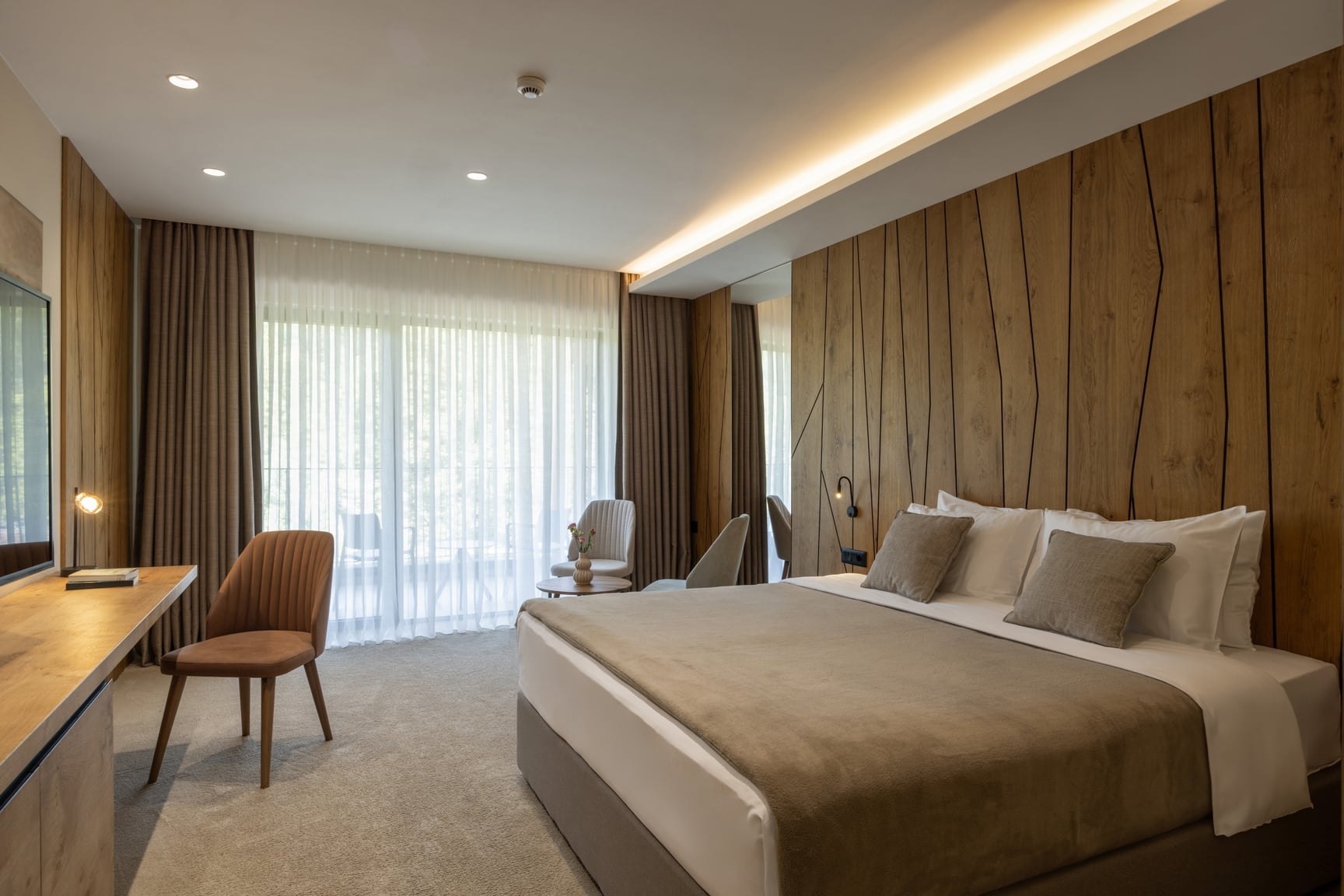
Liquor liability is written for hotels that pour drinks, from the lobby lounge to the wedding reception to the tray sent up to a room. If no alcohol is poured or provided anywhere on the property, the question may not arise.
This page is for owners who pour drinks or who host events where drinks are poured. It explains how liquor liability sits next to your general liability policy, which settings inside a hotel raise a question, and what an application may ask you about how service is run. It does not state a price or a limit, because those come from your hotel’s own facts.
Where it sits next to general liability
A general liability policy is the base layer when a guest is hurt on the premises, and our General Liability page walks through it. When a hotel is in the business of selling drinks, its general liability form may leave out the harm that follows a drink, and liquor liability is written for that gap. Triple-I’s overview of commercial general liability notes that liquor liability may be excluded from that coverage (Triple-I).
The practical split follows the story of the loss. A guest who trips on a loose tile in the bar, with no alcohol anywhere in the account, is a general liability question. A claim that says the hotel served someone it should not have is the kind of claim a liquor liability policy is written for. Read the exclusion wording on your own general liability form before assuming a policy responds, because the answer turns on the wording you hold.
Settings side by side. Under service by the hotel sit the bar, and room service with the minibar, each raising a question about how service is run. Under service at hotel events sit a banquet and an outside caterer’s event, each raising a question about who serves and whose policy answers. No figures are shown.
Where alcohol is served in a hotel
Alcohol reaches guests in more places than the bar. A useful way to test your program is to walk the property and list every setting where a drink changes hands, then ask what question that setting raises.
The bar and restaurant
An outlet open to guests and to visitors from outside is the obvious place to start. Ask how it is run: whether your own staff serve, whether the space is leased to an operator, how late it stays open, and whether there is entertainment. An application can ask about all of it.
Banquets, weddings and conferences
Event space brings people the hotel does not know, sometimes in a short window of concentrated service. Ask who supplies the alcohol: the hotel, the host or an outside caterer. Each arrangement raises a different question about who is serving and under whose license.
Room service and the minibar
A drink delivered to a room, or stocked in a minibar, is service even though it happens out of sight. An application may ask how age is checked at delivery and how minibars are stocked and restricted.
Complimentary receptions and happy hours
A manager’s reception or a welcome drink may cost the guest nothing, but free drinks are still drinks served by the hotel. Mention them to your agent rather than assuming they sit outside the conversation.
The pool bar and seasonal outlets
A pool bar, a patio or a seasonal outlet adds locations, hours and staff. List each outlet, including those that open only in warm weather, so the program reflects what really happens on the property.
From the pour to the claim. A drink is served, the guest leaves, harm follows, a claim is made against the hotel, and the liquor policy’s terms are read against it. No figures are shown.
From a drink to a claim
Picture an evening in which a guest is served at the hotel and later leaves. A crash, a fight or an injury follows, and the claim that reaches the hotel says the hotel served someone it should not have. A claim like that can be made and still need to be defended, whatever the hotel actually did.
For your program, what matters is that the policy’s terms are read against the claim: who was served, where, by whom, and whether the event falls inside the wording. That is why an agent asks about the setting and about the service itself, and why the label on the venue is only part of the picture.
Outside caterers, tenant-run bars and bring-your-own events
Not every drink at your hotel is poured by your staff. An outside caterer may bring and serve alcohol at an event. A tenant may run a bar in leased space. A host may ask to let guests bring their own. For each arrangement, ask who holds the license for the service, whose policy is meant to answer, and what the contract says.
Ask the caterer or tenant for a certificate of insurance that shows liquor liability, and ask whether your hotel can be added as an additional insured. Whether that status responds depends on the endorsement wording, so read it instead of relying on the certificate’s heading. Keep the certificate and the contract with the event file, and tell your agent about arrangements where your own staff are not serving, since an application can ask about those contracts too.
Service practices an application asks about
An application may ask how service is run. The questions can include whether servers are trained, whether identification is checked, how a server decides to stop serving a guest, whether incidents are written down, and whether there is security at late events. Answer them accurately, and keep the records that make the answers true.
Staff training on intoxication is a reasonable thing to raise. The National Institute on Alcohol Abuse and Alcoholism publishes an overview of how alcohol affects the body, which is useful background for training servers (NIAAA).
Fights and assault and battery wording
A fight in the bar is not only a liquor question. Whether fights tied to drinking sit inside the liquor policy, under a sublimit of their own or outside it altogether is a wording question. A general liability form may carry its own language on the subject. Ask which applies, where in the policy it sits, and get the answer in writing before the busy season starts.
Losses that raise other policy questions
A guest who has been drinking and then damages the building is a question for Property Insurance, which is written for the hotel’s own loss. A staff member hurt while breaking up a fight is a question for Workers’ Compensation. A guest served at the hotel who then drives the hotel’s own shuttle or another hotel vehicle is an edge case; it is a separate question for Commercial Auto Insurance, and worth raising with your agent early.
Rules that differ by state
The rules that apply to a business serving alcohol, and the licensing around it, vary from state to state, so the shape of the coverage depends on where the hotel is. We do not summarize them here. Start with our coverage by state pages, and discuss the particulars for your location with your agent.
Limits and structure
There is no figure here for the liquor limit; the way the hotel operates sets it. Ask whether the limit applies per occurrence, across the whole policy period in aggregate, or in a combined way, and ask how defense costs are treated. What drives the choice is how your hotel actually operates: the outlets you run, the events you host, the hours you keep, the volume of service, and what your contracts and any lender or franchisor ask you to carry.
If you want higher limits, Umbrella Insurance may be an option, provided the umbrella lists liquor liability among the underlying policies it sits over; that is an application question to settle early. For the cost drivers, see the guides for hotel owners.
Why Hotel Business Insurance
We start by mapping every place alcohol is served at your hotel, including the outlets and events that are easy to forget. We read the liquor wording on your general liability policy, then set quotes from our panel insurers side by side against that map. Our hotel insurance page shows how liquor liability fits into the program we build for a hotel.