
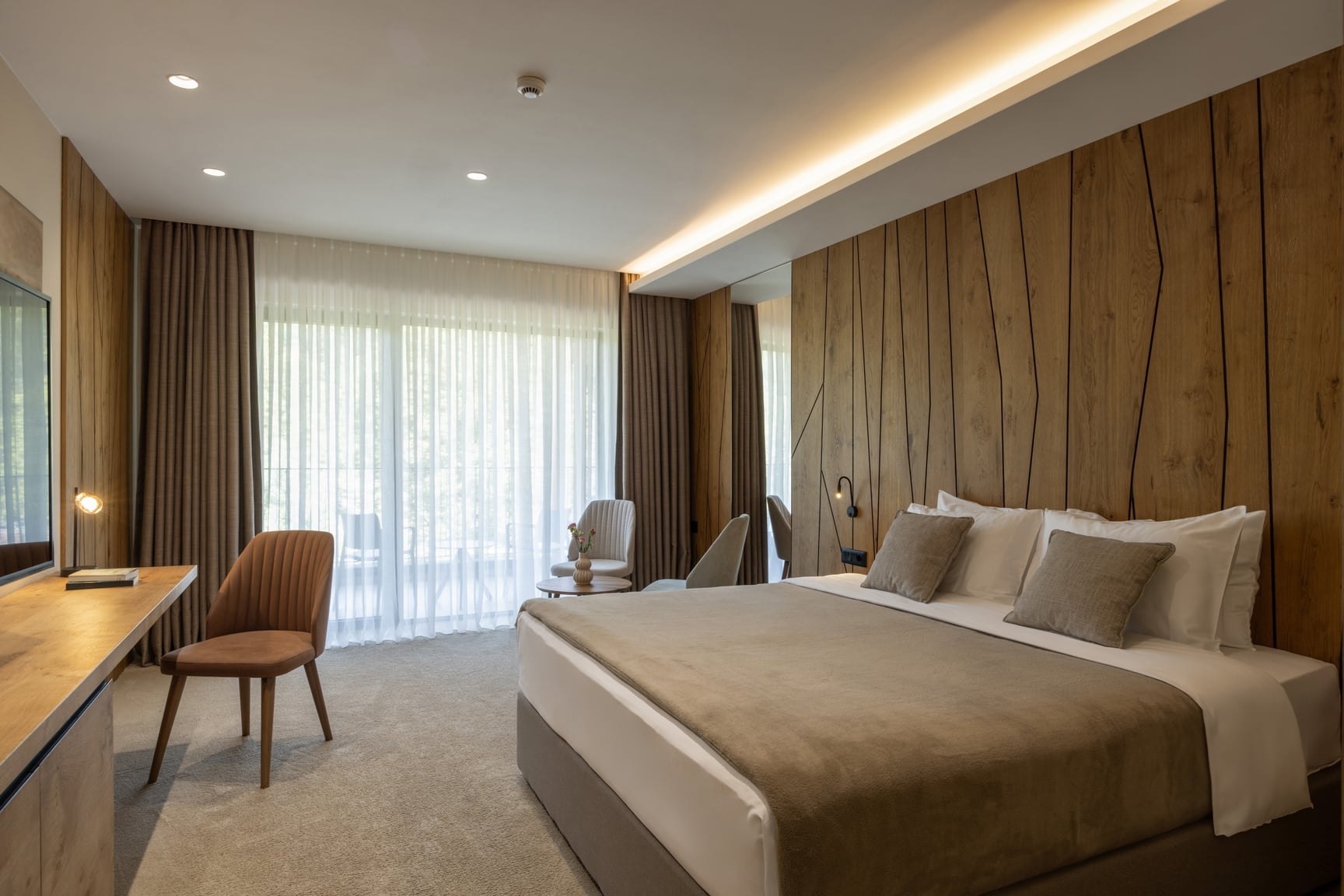
Hotel insurance in Idaho is built on a short list of statutes and a long list of local realities. The statutes we could read define what a hotel is, require a guest register, limit civil claims against those who furnish alcohol, and require every employer to secure workers’ compensation. The local realities are the lake resort that fills in summer, the ski lodge that fills in winter, the highway hotel that serves drivers all year and the downtown property that serves business travelers on weekdays. A policy has to answer for the second list while respecting the first.
This page reads the Idaho Code directly, quotes the sentences that matter with a link to each, and says in place where we could not establish a point. It does not summarize rules from memory. The hotel insurance page describes the whole program; this one stays with Idaho and with the questions an owner of an independent inn, a franchise property or a lodge brings to it.
What the Idaho Code says a hotel is
The hotel chapter of the Idaho Code opens with definitions. A hotel, in its words, is every building or structure “kept, used, maintained or advertised as an inn, hotel or public lodging house” (Idaho Code § 39-1801), and the section goes on to describe the place as one where sleeping accommodations are furnished for hire to transient guests, with or without meals. The same section defines a guest as a person who is registered in the hotel or intends to register, along with those who are present at the registrant’s invitation.
Those definitions are not trivia for an insurance program. They decide who the law treats as a guest, and a guest’s injury is the claim this kind of business exists to answer. A visitor who joins a registered guest in the room, a person who is checking in at the desk and a companion in the lobby all fall under the statute’s wording. The liability policy responds to the facts of the injury, but the way the state talks about guests is a reminder that the duty to a person on a hotel premises starts earlier and reaches wider than the name on the register.
The guest register and the claim file
The next section of the chapter is short and practical. It says “Every hotel shall keep a record of the arrival and departure of its guests” (Idaho Code § 39-1803) and then states how long the record must remain permanent, a period we leave in the statute. The rule is a records duty, not an insurance requirement, but a claim file is where the two meet.
When a guest says they were hurt on the stairs, in the pool area or in a parking lot, among the first questions an adjuster asks is who was staying where on that date. A register that is complete, legible and retrievable answers it in minutes. A register kept loosely turns the same question into a week of reconstruction, and a reconstruction invites disputes. Owners who run a property management system should know how to pull arrival and departure records for a past date, and owners who still keep paper should know where it is stored and who can read it.
A lodging license in Idaho: a stated gap
We did not find a state lodging license in the hotel chapter we read. The chapter holds definitions and the register rule, and one section we tried to retrieve returned a missing page, so we did not read the whole chapter. That means this page does not say that Idaho requires a state license for a hotel, and it does not say that Idaho does not. Whether a state, county or city license, or a health or fire inspection, applies to a particular property is not confirmed in our research.
What an owner can do is ask the right offices before opening or renewing: the city or county where the building stands, the fire authority that inspects it and the agency that oversees any kitchen or pool. A hotel that holds a local permit should keep a copy with the insurance file, because underwriters and lenders sometimes ask for evidence that a property is operating in good standing. The program is written for the building as it actually operates, so changes in rooms, amenities or use should be reported to the agent at the time they happen, not at renewal.
A hotel in lake, ski and river country
Idaho hotels differ more in setting than in structure, and the setting shapes the claims. A lakeside property faces docks, boat launches, beaches and a summer crowd that is relaxed and sometimes underdressed for the hazards. A ski lodge has icy walkways, boot rooms, drying rooms and shuttles to the lifts. A hotel near a river has guests who come for rafting and fishing and return with wet gear and tired legs. A highway hotel has a busy parking lot at all hours. Each setting suggests where a premises claim might begin.
Weather is a reliable source of loss without needing a statistic to say so. Snow and ice make the entrance, the stairs and the walkway the place to look first, and a documented routine for clearing and treating them is worth more than any sign. Freezing temperatures can burst pipes in a closed wing or an unheated stairwell. Wind and heavy snow load can damage a roof. Wildfire smoke and the evacuation of guests can interrupt operations even when the building itself is untouched. These are descriptions of how a hotel can lose money, not claims about frequency, and the property insurance conversation should take each of them seriously.
Alcohol service and Idaho’s civil-claim bar
A hotel bar, a restaurant with a wine list or a banquet room that serves at weddings puts the owner in the business of furnishing alcohol. Alcohol licensing sits with the Idaho State Police, Alcohol Beverage Control, whose page describes its alcohol beverage control work (state police alcohol page). We read the agency’s pages for its role, not for the terms of any license, and we did not retrieve the rules a hotel would apply under.
On civil claims, the Idaho Code speaks directly. Idaho Code § 23-808 says “No claim or cause of action may be brought by or on behalf of any person who has suffered injury, death or other damage caused by an intoxicated person against any person who sold or otherwise furnished alcoholic beverages to the intoxicated person, except as provided in subsection (3) of this section” (Idaho Code § 23-808). Put plainly, the statute bars a claim against someone who sold or furnished alcohol to the intoxicated person, with exceptions found in a subsection we have not summarized. That subsection is where the real questions live, and an owner or counsel should read it in full. We did not find, in the text we read, any statement that goes beyond that sentence and its exceptions, so we state no wider rule.
A narrow statutory bar does not make a bar program free of risk. Claims can be framed in ways a statute does not mention, a dispute can turn on whether an exception applies, and defending even a claim that fails costs money and time. Liquor liability exists to answer that kind of dispute, and the question to ask the agent is how a policy’s wording treats an incident at an event, at the bar and in the hotel’s own parking lot. The general liability policy may exclude or limit liquor-related claims, which is why a hotel with a bar should read both policies side by side.
Events deserve their own conversation. A wedding or a reunion in the ballroom might bring an outside caterer or bartender with its own license and insurance, or might operate under the hotel’s. The event contract settles which, and the hotel’s program should match what the contract says.
Payroll, owners and contractors under Idaho’s compensation rules
Idaho states the duty in one sentence: “Every employer shall secure the payment of compensation under this law in one (1) of the following ways” (Idaho Code § 72-301). The statute then lists the ways. Among them is “By insuring and keeping insured with a policy of worker’s compensation insurance” with an insurer authorized to transact it, and another is that “An employer may become self-insured by obtaining the approval of the industrial commission” (Idaho Code § 72-301). A hotel with a housekeeping staff, a front desk, a kitchen and maintenance workers will look to the insurance route, and the workers’ compensation page covers how that policy works.
Two questions we could not close. We did not find an employee-count threshold in the sections we read: the exemptions in section 72-212 list kinds of employment, such as household domestic service and casual employment, rather than a headcount, and a definition of employer is not a threshold. So this page states no number of employees at which the duty begins, and an owner with a very small staff should ask rather than assume. We also did not retrieve statute text that classifies the insurer by type, so we say nothing about what kind of entity the insurer must be beyond what section 72-301 itself says about authorization.
We also did not find a state fund described in the text we read for a private employer. The statute we read refers to a state insurance fund in connection with public employers, which is not a hotel owner’s situation, and we did not retrieve the fund’s own statute. If you hear that a state fund is available to you, ask the commission or your agent for the source before relying on it. The commission, the Idaho Industrial Commission, publishes information on its site (Industrial Commission).
Owners have a choice that the statute handles by exemption. Idaho Code § 72-212 lists employment that is exempt, including “Employment as the owner of a sole proprietorship; employment of a working member of a partnership or a limited liability company; employment of an officer of a corporation who at all times during the period involved owns not less than ten percent (10%) of all of the issued and outstanding voting stock of the corporation and, if the corporation has directors, is also a director thereof” (Idaho Code § 72-212). The record notes that the exemption applies unless coverage is elected as provided in section 72-213. An owner who works the desk, carries bags or covers a housekeeping shift should ask the agent whether to elect coverage, because without it an owner’s own injury at work may sit outside the policy.
Contractors raise the other common hotel question. Idaho defines an independent contractor as “any person who renders service for a specified recompense for a specified result, under the right to control or actual control of his principal as to the result of his work only and not as to the means by which such result is accomplished” (Idaho Code § 72-102). That is a control-of-means definition, and we did not retrieve a multi-factor test. For a hotel, the practical consequence is that a pool service, a landscaper, a snow-removal crew or a laundry vendor should be reviewed against the definition, with the contract and the actual working relationship in view, and the agent should hear who works on the property.
The guest shuttle, the ski van and the auto question
A hotel that runs an airport pickup, a lift shuttle, a valet or a maintenance truck operates vehicles, and vehicles are a separate exposure from the building. The commercial auto policy is the tool, and it should describe every vehicle the hotel owns or leases and every driver. Idaho’s code defines proof of financial responsibility in Idaho Code § 49-117 (Idaho Code § 49-117). The record marks that section as a definition, not a stand-alone minimums section, so it is dated: this page names no amount, and the current figure is not confirmed in our research. Ask the agent to confirm it for the vehicle and the use.
The state’s floor is not the same as a hotel’s need. A shuttle that carries guests to a lift, a lake or a terminal has passengers, and a passenger’s injury can exceed what a floor contemplates. Owners often discuss higher limits with the agent, and the umbrella insurance policy can sit above the auto and general liability programs when the exposure justifies it.
Staff who run errands in their own cars are a different exposure. A hired and non-owned auto endorsement addresses the hotel’s liability when an employee’s personal car is used on hotel business, such as a trip to the bank or a supply run, or when the hotel hires a vehicle for an event. Winter driving adds a reason to write down who may drive what, where the vehicles are kept and how a driver is vetted. The agent will ask, and a clear answer lowers the chance of a coverage argument later.
Fitting the six coverages to an Idaho property
General liability carries the premises claims on this page: the icy step, the pool deck, the breakfast room, the lot and the injuries that follow. Property insurance covers the building the owner holds, plus business personal property such as furniture, linens and kitchen equipment, and it should reflect the roof, the heating system and any outbuildings. Workers’ compensation answers for staff injuries under the duty Idaho states. Commercial auto carries the shuttle and the service vehicles. Umbrella insurance sits above the liability and auto programs. Liquor liability addresses the bar and event claims the civil-claim bar may not reach.
Each coverage page goes deeper than this one, and the hotel insurance page lays out how they fit together. On this page the Idaho text only decides where each policy starts: the statute defines the guest, requires an employer to secure compensation, and limits one kind of alcohol claim, and everything else is a matter of how the property actually runs. If the hotel is converting a building, adding a wing or changing its food and drink offering, tell the agent before the work starts.
The paperwork behind an Idaho hotel program
Much of what a hotel program has to show comes from contracts, not statutes. A franchise agreement may name the coverages, set minimum limits and ask to be named on the policy. A lender may require evidence of property coverage and a loss payee. A group booking or an event contract may ask for a certificate naming the host. A vendor who works on the property, such as a roofer or a snow crew, may be asked to provide its own certificate and workers’ compensation proof.
None of those demands comes from the state; each comes from a document you signed or are about to sign. Gather the franchise agreement, the loan documents and the standard event contract, and show them to the agent early. The agent can compare what each asks for against what the program provides, and can tell you which gaps matter before a lender or a franchisor finds them.
What to bring to the first conversation
A useful first conversation about an Idaho hotel begins with a plain description. Say how the property is built, how old the roof and the heating are, what amenities the guests can use, whether there is a bar or a banquet room, which vehicles the hotel runs, the size of the staff and the seasons it works, and which contractors come onto the property. Bring the lender’s and franchisor’s insurance requirements, the register routine, the incident log and any inspection reports.
Also bring the questions this page could not close. Ask whether any state, county or city license applies to the building. Ask whether the staff size triggers any special handling in the compensation policy. Ask whether an owner who works at the property should elect coverage. Ask for the current auto figure from the source. A good agent answers from the actual policy and the actual statute, and says so when the answer is not yet known.