
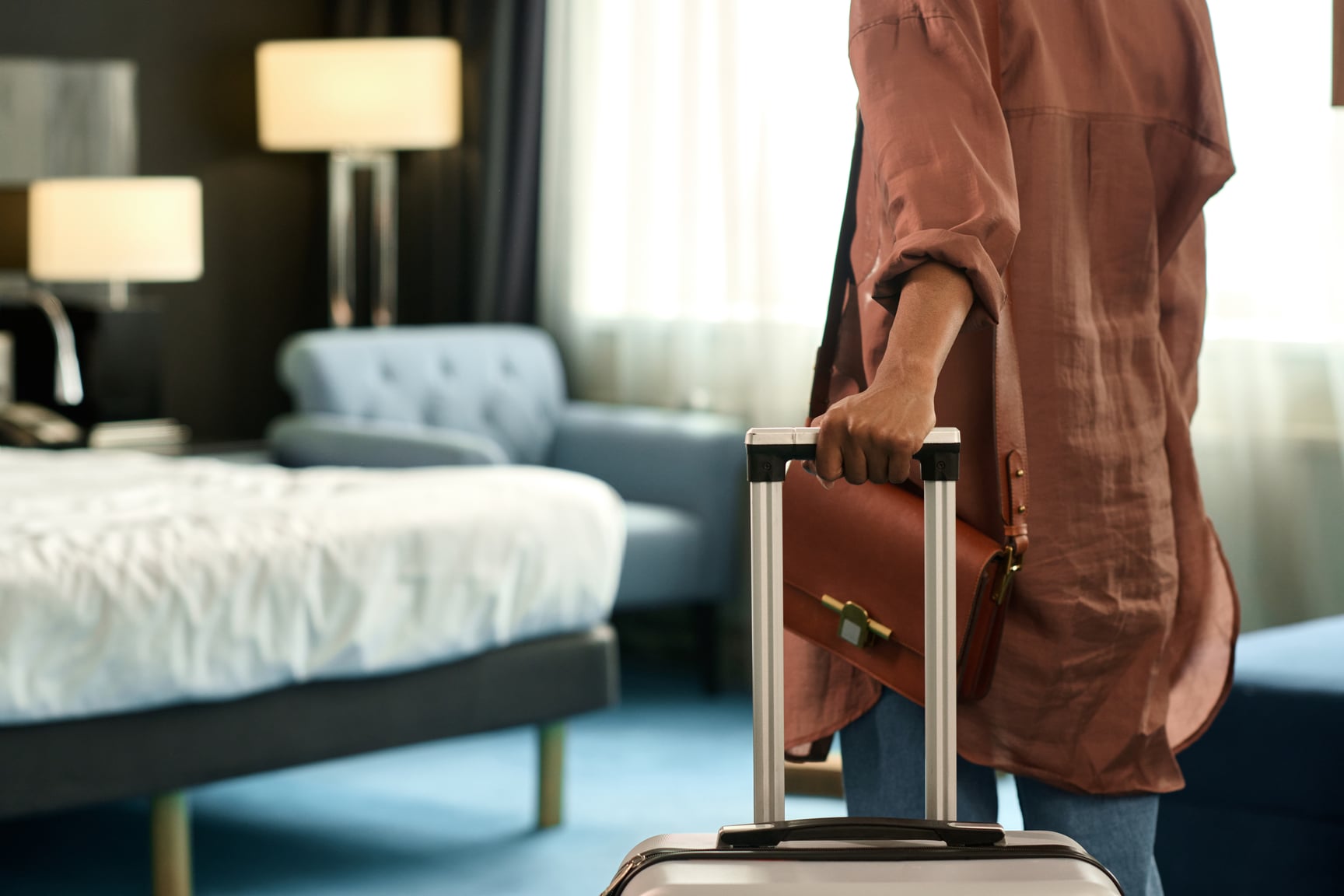
Hotel insurance in Washington is shaped by two state systems that few other places combine in this way. A hotel is licensed by the state itself, through the Washington state department of health, and its staff are covered by a state-run workers’ compensation fund that employers are directed to join. Everything else in the program, from the guest who slips in the lobby to the roof over the lobby, is bought from private insurers in the ordinary way. An owner buying or running a property here needs to know which half of the program is which.
This page reads those rules from the Revised Code of Washington, quotes the sentences that matter with a link to each, and says plainly where something is not confirmed in our research. The hotel insurance page describes the whole program; this one stays with Washington, and with the questions an owner of an independent hotel, a franchise property, a resort lodge or a city-center tower brings to it.
The operating license a Washington hotel holds
Washington licenses hotels at the state level. The statute speaks of a transient accommodation, and its definition names the hotel directly. RCW 70.62.210 describes that as a facility “offering three or more lodging units to travelers and transient guests” (RCW 70.62.210), and the same section defines the department as the Washington state department of health. The duty to hold a license is in the next section: “The person operating a transient accommodation as defined in this chapter shall secure each year an annual operating license” (RCW 70.62.220).
Two further details in that section are useful to an owner. The license is renewed on the date it was first issued, so it runs on its own calendar rather than the calendar year. And it must be on display: the statute says “The license shall be conspicuously displayed in the lobby or office of the facility for which it is issued”. A front-desk team that knows where the framed license hangs is a small sign of a property that keeps its paperwork in order.
We read the license sections and did not retrieve a separate state inspection rule or a statutory fee schedule, so this page does not describe either. The fee is set by the department under the section cited above, and the department is the place to ask what it expects at the first license and at each renewal. Cities and counties can have rules of their own, and the local building and fire officials are separate from the license.
Where the license and the policies meet
A license is a condition of operating; it is not a source of coverage, and the two answer different questions. The license says the state allows you to receive guests at a stated place. The program answers for the guest who is hurt there, the building that is damaged, and the employee who is injured on the job.
The points where they touch are practical. The property insurance schedule should describe the same building the license covers, including an annex, a lodge cabin, a converted boathouse or a second tower on the lot. The annual renewal date is worth setting beside the policy renewal, so a change in the number of lodging units, a new pool or a new bar lands in both reviews. A serious incident at the hotel can also reach both: the department that issues the license and the insurer that renews the policy may ask about the same night.
The liability questions are the familiar ones for a hotel anywhere: a fall on a wet lobby floor after a rainy evening, a guest hurt on the stair to a mezzanine, a child at the pool, a guest made ill by the breakfast service, a dispute in the parking structure. These land on general liability, and its wording, not the license, decides how each is handled.
Weather, terrain and the Washington property
Washington hotels sit in very different settings, and the physical risks differ with them. A coastal or island property faces wind-driven rain, salt air on its fixtures and storm outages that can leave the building without power for days. A hotel near a mountain pass carries snow load on its roof and deals with closed roads that strand guests and delay deliveries. A city-center property has dense neighbors, a garage, a loading dock and a steady flow of conference guests. A resort lodge near a lake or a river has a dock, a boat launch or a trail, each of which is a liability exposure in its own right.
The property policy is where those differences show. Owners should ask how the policy treats water damage from a storm and from a burst pipe, how it treats damage from smoke after a wildfire elsewhere in the region, and what it says about the building’s ordinance or law costs if a rebuild must meet current code. A flood or earth-movement loss is a separate question from a fire loss, so the agent should explain which perils are inside the policy and which are not, in words you can take to a lender.
Lost income deserves its own sentence. A hotel that closes rooms after a loss stops earning while its payroll, loan and franchise obligations continue. The policy’s business income part, and the length of time it will pay, are worth reading before they are needed.
Pools, kitchens, shuttles and amenities
A Washington hotel with a pool, a spa, a restaurant, a fitness room or a shuttle van carries the exposures of each. Our research did not retrieve a state pool or food service rule for this page, so we do not describe those standards, and an owner should confirm with the local health authority what applies to the property.
What can be said without a statute is how an underwriter reads the amenities. At the pool, the questions are supervision, depth markings, gates, posted rules and the condition of the deck. In the kitchen, they are food handling, the buffet line, allergy procedures and the banquet service for weddings and conferences. In the fitness room and the spa, they are equipment upkeep and signage. At the dock or the trailhead of a lodge, they are waivers, lifejackets and who supervises the guests. Inspection reports that show a clean history are worth sending along with the quote request.
The lobby bar, the restaurant and the banquet room
A hotel bar, a restaurant with a wine list or a ballroom that serves at weddings operates under the Washington state liquor and cannabis board, the agency that the liquor statutes refer to. One statute in the liquor chapter is short enough to quote whole: “No person shall sell any liquor to any person apparently under the influence of liquor” (RCW 66.44.200). The same section makes it an infraction for a person apparently under the influence to purchase or consume liquor on licensed premises, and it separates the administrative action from the infraction.
That section is a prohibition with public consequences. We did not find a civil server-liability statute in the text we read: we searched RCW 66.44.200 and its chapter, and the section does not create a right to sue a licensee. Whether a Washington court allows a claim against a server by someone injured by a guest who was served too much is not confirmed in our research, and this page states no rule either way. For the hotel the practical point is the same: a claim from a person the guest later injures, whether a driver on the road home, another guest in a fight or a pedestrian in the lot, would be argued from the facts, and liquor liability is the coverage written for that ground, read beside the hotel’s general liability, whose own alcohol exclusion is worth a direct question.
A written service policy, trained staff, a record of refusals and a practice of calling a ride are the evidence that matters if a claim follows a night at the bar. Events add a layer. A caterer or an outside bartender at a function in your ballroom brings its own license and insurance, or works under yours, and the event contract is where that is settled. Ask for the caterer’s certificate before the event, and read whether your contract asks the hosts to carry anything themselves.
The state fund and the hotel payroll
Washington’s workers’ compensation system is monopolistic: employers insure with the state, not with a private insurer. RCW 51.16.060 says that “every employer not qualifying as a self-insurer, shall insure with the state” (RCW 51.16.060). The department of labor and industries administers the system, and it collects the premiums the statute describes. The state fund is a government unit, so it may be named as the insurer of a Washington hotel’s employees; the Department of labor and industries is the agency to call about an account.
Self-insurance is the exception the statute names. RCW 51.14.020 lets an employer qualify as a self-insurer by establishing to the director’s satisfaction that it has sufficient financial ability to make certain the prompt payment of all compensation (RCW 51.14.020). A single hotel will rarely look like that applicant, but a large operator with numerous properties may ask the question.
The practical consequence for a hotel is a program split in two. Housekeepers, front-desk agents, kitchen staff, maintenance crews and valets are covered through the state, and the policies bought on the private market do not replace that coverage. Our workers’ compensation page explains how the cover works for a hotel staff; in Washington, the employer’s job is to register, report payroll on the schedule the state sets and keep the account in good standing.
One question we could not close from the statutes we read: whether the system has an employee-count threshold. We read RCW 51.12.010 and 51.12.020, and coverage reaches all employments except the listed exclusions. An employee-count threshold is not confirmed in our research, so this page states none; the one count in the exclusions applies only to domestic work in a private home, and a hotel is not that. Ask the department how a new employer is registered.
Owners, officers and contract workers
The owners of a hotel are a separate question from its employees. RCW 51.12.020 lists the employments outside mandatory coverage, and one of them is “Sole proprietors or partners” (RCW 51.12.020). The statute that follows lets the employer fill that gap: an employer with excluded persons “may file notice in writing with the director, on such forms as the department may provide, of his or her election to make such persons otherwise excluded subject to this title” (RCW 51.12.110). Corporate officers and LLC members have separate conditions in RCW 51.12.020, so the owner’s entity form matters.
For an owner who works the night desk, carries bags or covers a housekeeping shift, that election is a decision to make early. Without it, an owner’s own injury at work sits outside the state fund. An agent can lay out how the election fits with disability and health coverage the owner already carries, and the notice is the owner’s to file.
Contract workers are the second area where hotels get surprised. The independent-contractor test in the same title is a multi-part test, and the statute says each part must be met. The first part reads: “The individual has been and will continue to be free from control or direction over the performance of the service, both under the contract of service and in fact” (RCW 51.08.195). The test continues through business-structure, tax and registration conditions, and all of them are read together. A hotel that uses contract housekeepers, a laundry service, a valet company or an event staffing agency should read the full test with its agent, because a hotel that directs how the work is done may find the worker treated as its employee. The cost of that mistake is in the premium and in the state’s audit, not in the contract.
The shuttle, the valet stand and the maintenance truck
A hotel that runs an airport or ferry-terminal shuttle, a valet service or a maintenance truck operates vehicles under the state’s motor vehicle law. RCW 46.29.090 sets the limits a policy must carry to prove financial responsibility, and the passage reads: “to a limit, exclusive of interest and costs, of not less than twenty-five thousand dollars because of bodily injury to or death of one person in any one accident” (RCW 46.29.090). The section goes on to set further limits for two or more people and for property damage, which this page does not copy. We state the quoted figure as the statute’s floor for proof of financial responsibility and not as a recommendation. For a vehicle that carries guests, a lender, a franchisor or common sense will ask for far more than the floor.
A guest hurt boarding the van under the porte-cochère may raise both an auto question and a premises question, which is why the commercial auto and general liability policies should be read together. Staff who run errands in their own cars are a different exposure. A hired and non-owned auto endorsement answers for the hotel’s liability when an employee’s personal car is used on hotel business, and it is worth asking about even when the hotel owns no vehicle at all.
The six policies and a Washington hotel
General liability carries the premises claims on this page: the wet lobby, the pool, the dock, the breakfast room, the garage and the third-party claims that the alcohol statute leaves open. Property insurance covers the building named on the license, and the furnishings, linens and equipment inside it, with lost income while rooms are closed as a part to ask about. Workers’ compensation is the state’s, and the owner election above is the decision to settle. Commercial auto covers the shuttle and any hotel vehicle. Liquor liability follows the bar, the restaurant and the ballroom. An umbrella adds a layer above the primary liability policies when a franchisor, a lender or the owner wants a higher ceiling.
Proof of coverage that contracts will ask for
A good deal of what a Washington hotel program has to show comes from contracts rather than statutes. A franchise agreement may name the coverages, set minimum limits and ask to be named on a policy. A lender will want its interest in the building recorded and the property insured to value. A wedding planner, a conference organizer or a corporate client booking a block of rooms may ask for a certificate naming their company before the deposit clears. And the owners of a hotel being sold will meet a buyer who asks for loss runs and the state workers’ compensation account history.
New owners: what to settle before the closing
Put the pieces above in order and the Washington part of the work is short. Apply to the Department of Health for the operating license for your building, and note the renewal date. If the hotel will serve alcohol, start the liquor license early with the liquor and cannabis board, and write the service policy before the first night. Register the business with the state workers’ compensation system before the first employee starts, and decide whether the owners will file the election to be covered. Read the independent-contractor test against every contract worker. Confirm the current motor vehicle minimums with the agent. Then match the certificate to what the franchisor, the lender and the event clients ask for in writing.
If you are buying rather than opening, treat the license as something to confirm with the department rather than assume. Our research did not retrieve a statute on transfer, so we state no rule about it. Have the new program bound in your name before closing, because the seller’s policies were written for the seller, and the state workers’ compensation account will need to be in order from the first day of your payroll.