
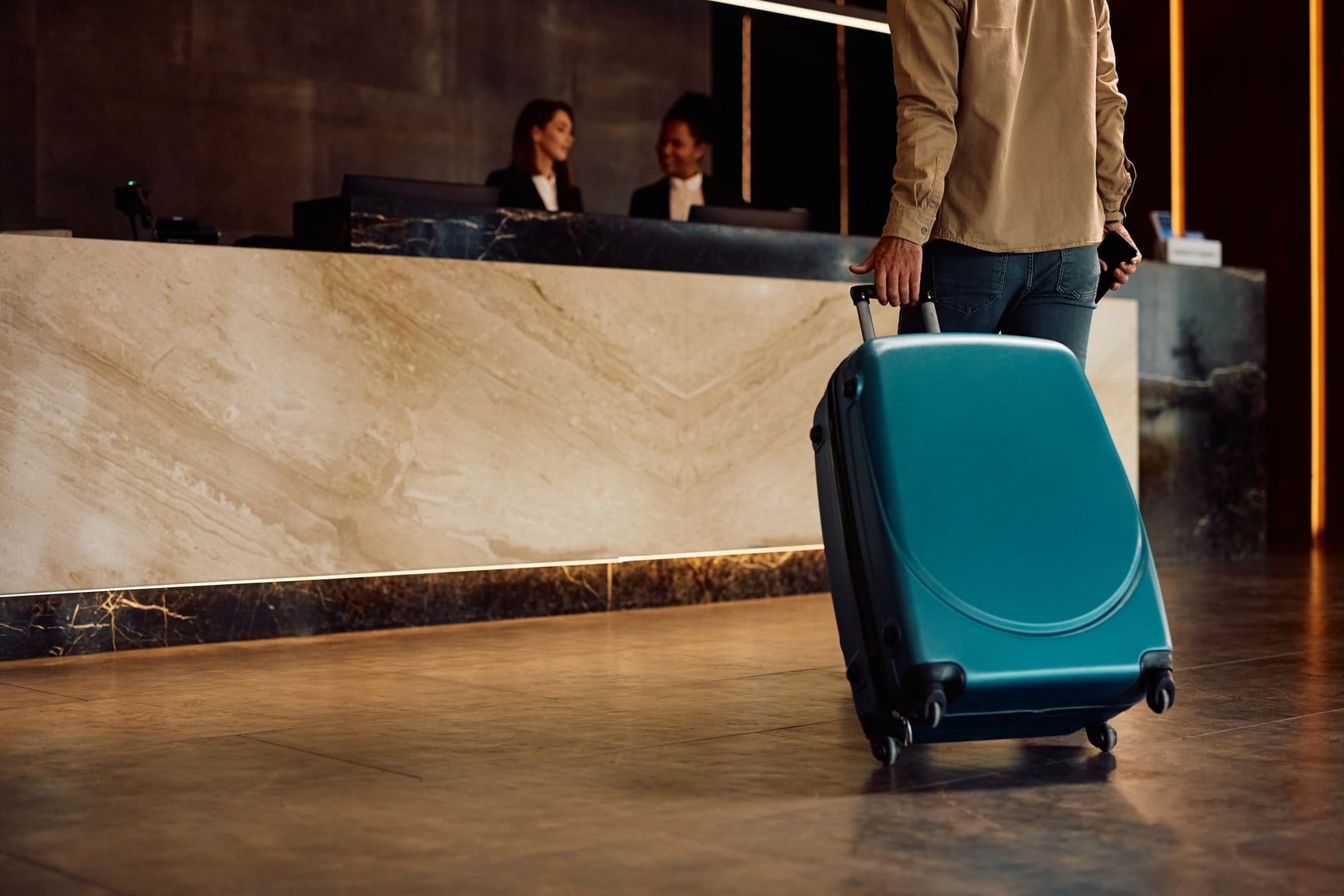
Hotel insurance in Colorado is shaped by property as much as by law. A ski-town lodge, a roadside property on a mountain pass, a downtown business hotel and a suburban property near an airport share a program’s six parts but not its pressure points. Snow load on a roof, a hot tub on a deck, a shuttle on a winding road and a banquet room on a Saturday each raise a different question, and the state’s statutes answer only some of them.
This page reads the Colorado Revised Statutes we saved and quotes the sentences that matter, with a link to each. Where we could not establish a point, we say so in the sentence where it comes up. The hotel insurance page describes a full program; this page stays on Colorado, and on what an independent owner, a franchise operator or a buyer of an existing property asks about it.
Is there a state lodging license for a Colorado hotel?
It is not confirmed in our research. We looked for a state lodging license in the statute text we read and did not locate one, but we did not sweep the full index of the code, so the absence of a result is not a finding. This page therefore says neither that a license is required nor that none is. Treat it as an open question to put to the city or county where the hotel stands and to the agent who writes the program.
The practical step is the same for an existing hotel and a purchase. Ask the local authority in writing what the property needs to receive guests, keep the answer with the policy file, and send it along with the quote request. If the answer changes after a renovation, an added wing or a new event space, send the update to the agent as well, so the application and the building describe the same hotel.
Alcohol at a Colorado hotel: the licensee’s civil-liability rule
A hotel bar, a lobby lounge, a restaurant with a wine list and a ballroom that pours at weddings all serve under a license from the State Licensing Authority, the body the liquor code creates. The liquor code’s civil-liability section opens with a rule that favors the licensee: “No licensee is civilly liable to any injured individual or his or her estate for any injury to the individual or damage to any property suffered because of the intoxication of any person due to the sale or service of any alcohol beverage to the person, except when: (I) It is proven that the licensee willfully and knowingly sold or served any alcohol beverage to the person who was under the age of twenty-one years or who was visibly intoxicated” (Colorado Revised Statutes, liquor code, civil liability of licensees).
Read that sentence carefully. The starting point is that a licensee is not civilly liable for harm caused by a person’s intoxication. The exception is narrow and turns on proof: the licensee must have acted “willfully and knowingly”, and the person served must have been under the drinking age or visibly intoxicated. A server who keeps pouring for someone who is slurring and unsteady is the picture the exception describes.
The record also tells us the section goes on. It adds further conditions after the first exception, including a filing period, and we did not quote them, so this page does not state them. Anyone relying on the rule should read the whole section, or have counsel read it, before treating a claim as barred. A summary on a web page is a starting point, not a defense.
For the insurance program, the lesson is about evidence. The statute turns on what the licensee knew and did, so the records that matter are training logs, a written service policy, incident reports and the notes a manager makes when a guest is refused. A hotel that keeps those can show a claims handler what happened on the night. Liquor liability is the policy written around this exposure, and it sits beside the hotel’s general liability, which may carry its own alcohol exclusion worth a direct question.
Events add a layer. A caterer or an outside bartender at a function brings a license and insurance of its own, or works under the hotel’s, and the event contract is where that is settled. Ask for the vendor’s certificate before the function, and read what the contract asks the host to carry.
What a Colorado hotel is exposed to, property by property
Law is only one input. Underwriters price the building, the amenities and the way guests move through them. A mountain lodge has a roofline that sheds snow onto a walkway, a drive that ices over at dusk, a fireplace in the lobby and a hot tub that guests treat as a private space after dark. A downtown hotel has a street entrance, a garage and a rooftop bar. A highway property has a long lot, a pool that is busy in summer and a breakfast room that serves a different crowd every morning.
A frequent claim at a hotel is a guest hurt on the premises: a slip on a wet entry, a fall on a stair, an injury at the pool, a guest made ill by the buffet. Those land on general liability, and the policy’s wording, not the state’s licensing structure, decides how each is answered. Document the walkway routine, the pool rules, the kitchen log and the incident reports, and keep them where a manager can find them in an hour.
Weather matters to the building. Heavy snow, wind, hail and fire are the events property insurance is tested by, and a hotel’s dependence on a few seasons raises a further question: how the policy treats lost income if rooms close for repairs in the busy months. Ask how income is measured, how long the period lasts and whether a closure caused by damage nearby counts.
Securing staff injury coverage in Colorado
The workers’ compensation articles place a duty on employers they cover. They say such an employer “shall secure compensation for all employees in one or more of the following ways” (Colorado Revised Statutes, workers’ compensation articles, securing compensation). The record reads that sentence as the operative duty: the employer must secure compensation, by insurance, self-insurance or a similar route the statute lists. The statute does not use the word compulsory, and we do not put it in the law’s mouth; the duty to secure is what matters.
The Division of Workers’ Compensation in the Department of Labor and Employment is the agency the statutes create for the system. Its role is described in the statute text we saved, and we cite that text rather than an agency page. For a hotel, the practical result is simple: a payroll that includes front-desk staff, housekeepers, kitchen workers, maintenance and drivers must have its coverage in place on the first day.
The statutes also create an insurer by function. They say that insurer “shall be a political subdivision of the state and shall operate as a domestic mutual insurance company” (Colorado Revised Statutes, workers’ compensation articles, the statutory insurer). In plain terms, it is a political subdivision that behaves as a mutual insurer and is not a state agency. We describe it by function and do not name it. The point for an owner is that the statute creates it as a carrier, a company one may buy a policy from, and not as a government office that stands outside the market.
What we could not establish is a threshold. We found only the statute’s definition of employer, and a definition of employer is not the same as a rule about the number of workers that triggers the duty. We did not retrieve a separate employee-count rule, so this page states no threshold either way. A small hotel with a few part-time employees should ask the agent and the division how its payroll is treated before assuming anything.
The workers’ compensation page explains how the policy works for a hotel staff, including how payroll classifications are assigned and why a housekeeping injury and an office injury are rated differently.
Owners, officers and members of a Colorado hotel company
A hotel is often held through a company, and the statute speaks to that case. The record reads the articles as letting a corporate officer or a limited liability company member reject coverage for themselves, and a working sole proprietor or general partner choose to be included. The sentence we can quote is short: such a person “may elect to reject the” (Colorado Revised Statutes, workers’ compensation articles, election to reject coverage). The inclusion option sits in a different section, which we did not quote separately.
Why does the choice matter at a hotel? Because owners of small properties often work shifts. An owner who covers the night desk, hauls linens or clears a walkway after a storm is exposed in the same way as an employee, and an owner who has rejected coverage has no policy that answers for an injury at work. The decision belongs in the program’s file, in writing, with the date and the person who made it.
Contract workers at a Colorado hotel: who counts as independent
Hotels use outside labor: a landscaper who clears snow, a laundry crew, a valet company, an entertainer at a function, an electrician on a call. The statute draws a line between employees and independent workers, and it is a demanding one. A worker is treated as independent only when “free from control and direction in the performance of the service” and customarily engaged in an independent trade or business (Colorado Revised Statutes, workers’ compensation articles, independent worker test). The record adds that the proof is by a preponderance of the evidence or a written document, and that the statute then lists conditions that show independence. We read the opening of the test and not the whole list.
Apply it to a hotel in ordinary language. A housekeeper who works the hotel’s schedule, uses the hotel’s cart and supplies, and follows the hotel’s room standards is under control and direction by any plain reading. A company that brings its own crew, its own tools and its own other customers looks different. Between those poles sits a gray area, and the hotel should not decide it alone on a handshake.
The insurance consequence is direct. If a contractor’s worker is hurt and the contractor holds no coverage, the question of who answers for the injury lands on whoever hired them. Ask every outside vendor for a certificate of its own coverage, write the requirement into the vendor agreement and check the certificate’s dates at each renewal. A certificate on file is cheap; a missing one is expensive.
Shuttles, valets and vehicle limits at a Colorado hotel
A hotel that runs an airport shuttle, a ski shuttle, a valet stand or a maintenance truck operates vehicles under the state’s motor vehicle title. The amounts we read come from the financial-responsibility article, and they are definitions for proof of financial responsibility, not the compulsory-insurance section, which we did not retrieve (Colorado Revised Statutes, motor vehicle title, financial responsibility definitions). Because the figures may have been amended in the section we did not read, we print none of them. The current minimum is a question for the agent.
A floor is not a plan in any case. A van that carries guests on a mountain road in winter exposes the hotel to a claim far larger than a statutory minimum would cover, and a lender, a franchisor or an event client will ask for more in writing, so read those documents rather than the statute to see what the program needs to show. Commercial auto is the policy that carries the vehicles the hotel owns or leases, and the agent can explain how it fits with the premises policy when a guest is hurt boarding.
Staff who run an errand in a personal car add a second exposure. A hired and non-owned auto endorsement answers for the hotel’s liability when an employee’s own vehicle is used on hotel business, and it is worth asking about even where the hotel owns no vehicle at all. The same goes for a valet who parks a guest’s car: damage and theft claims raise questions that sit between the auto, property and general liability policies, and the wording of each decides how they divide.
Reading the six policies against a Colorado property
General liability carries the guest-injury claims described above: the icy walk, the pool deck, the lobby floor, the breakfast room and the third-party claims that the alcohol rule does not settle. Property insurance insures the building and its contents, and its value rests on how the building is described and how lost income is measured. Workers’ compensation is the staff policy the statutes require, and the owner election is the choice to settle in writing. Commercial auto follows the shuttle, the valet fleet and the maintenance trucks. Liquor liability follows the bar, the restaurant and the ballroom. An umbrella adds limits above the primary policies where an owner, a lender or a franchisor asks for more.
Each coverage page goes deeper than this one. On this page, the Colorado text decides where each policy starts: the liquor code frames the civil claim after an alcohol sale, the workers’ compensation articles make the staff policy a duty, the independent-worker test tells you which outside crews need their own coverage, and the motor vehicle title sets a floor the shuttle should be far above.
Lenders, flags and event clients in Colorado
Much of what a hotel program has to show comes from contracts, not statutes. A franchise agreement may name the coverages, set limits and ask to be named on the policy. A lender will want its interest in the building recorded and the property insured to its full value. A corporate client reserving a block of rooms, a wedding planner or a conference organizer may ask for a certificate naming their company before the deposit clears.
None of those demands comes from the state. Each comes from a document you signed or are about to sign. Collect the franchise agreement, the loan documents and your standard event contract, and send them with the quote request, so the certificates can say what each one requires on the first try. That habit saves a property a round of corrections at the busiest time of year.
Buying or opening a hotel in Colorado: a sequence
Put the pieces in order. Ask the local authority in writing what the property needs to receive guests, since the state-level answer is not confirmed in our research. If the hotel will serve alcohol, start the liquor license early, and write the service policy before the first night. Put workers’ compensation in place before the first employee starts, decide whether the owners will reject or accept coverage for themselves, and settle how contract and agency workers are counted. Confirm the current motor vehicle minimums for the shuttle with the agent. Then match the certificates to what the franchisor, the lender and your event clients require in writing.
If you are buying rather than opening, remember that the seller’s policies were written for the seller. Ask what permissions the property runs under and how they transfer, and have the new program bound in your name before the closing. Request the loss history for the building, the pool and the kitchen, because the new insurer will, and a clean record is something you can show.
What the Colorado statutes above do and do not settle
Every rule above is quoted from the Colorado Revised Statutes as the General Assembly publishes them, and every quotation links to its source. Where a question stayed open, whether the state has a lodging license, an employee threshold for workers’ compensation, the current motor vehicle minimums and the conditions the liquor section adds after its first exception, we say it is open rather than fill it in. Laws change, and an agency’s answer to your own facts outranks this page. Check the source before you rely on a detail, and ask us when the insurance side is the question. When a source we cite changes, this page is reread against it, and the review date at the top moves with that reading.