
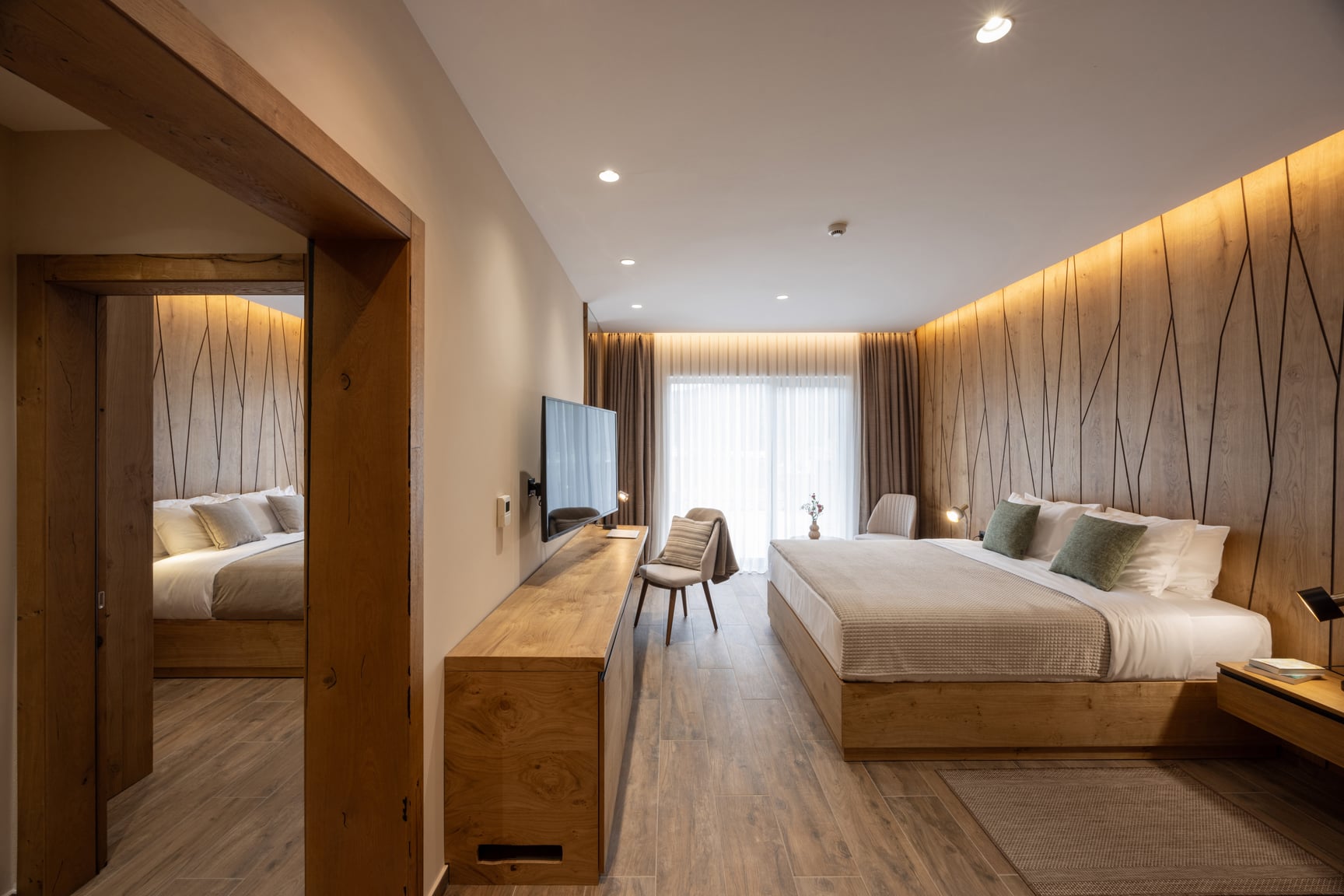
Insuring a boutique hotel in Nashville starts with what makes it a boutique property, not its room count: hotel general liability with property ranges from $1,500–$3,000+ a year, and an entire program for a larger property can run $2,500–$5,000+ a year, ranges Nate Jones, CPCU, has verified. The bar, the events and the interiors decide where yours lands.
Nashville’s boutique hotels trade on atmosphere. A lobby that doubles as a bar, a rooftop with a view of the skyline, a stage for a songwriter on a weeknight and rooms full of custom furniture all draw guests, and each one shows up in an insurance file. The process below walks an owner through it, and the state notes we keep are on our Tennessee hotel insurance page. The full program is laid out on our hotel insurance overview.
Treat the bar as its own line of business
A boutique hotel’s bar is often a destination of its own, with guests who are not staying the night. That changes the exposure. Alcohol service brings the risk of an overserved guest who is hurt or hurts someone else, and the policy that answers is liquor liability, quoted alongside general liability.
Underwriters will ask about the bar’s hours, its share of sales, whether staff are trained in responsible service, how identification is checked and who handles security on a busy night. A rooftop adds questions about railings, furniture near the edge and occupancy limits. Answer them in writing. The National Institute on Alcohol Abuse and Alcoholism publishes background on how alcohol affects judgment and coordination, useful material for staff training. Our post on liquor liability for hotel bars covers the coverage in more depth.
Disclose live music and event bookings
Live music and private events are part of the appeal, and they are part of the risk. A crowded room, a temporary stage, sound equipment and a later night all raise the chance of a slip, a fall or a dispute. General liability covers the hotel’s own operations, but the policy may treat certain events differently, and the carrier needs to know they happen.
When an outside promoter, band or planner runs an event, ask for their certificate of insurance naming the hotel as an additional insured, and keep the certificates on file. Our guide to a guest injury claim shows how an injury at an event would be handled.
Value the interiors at what they cost to replace
Boutique hotels often spend heavily on design: custom headboards, commissioned art, imported lighting, restored woodwork. A property policy pays to replace what is damaged up to its limit, so the contents limit has to reflect what it would cost to buy and install the same pieces today.
Keep a room-by-room inventory with invoices and photos. Ask your agent whether any single piece is valuable enough to schedule separately. For the building itself, especially a renovated older structure, confirm that the limit reflects the cost to rebuild with comparable materials and that the policy includes coverage for the extra cost of meeting current building codes. Our property insurance page explains how the building and contents are written.
Real-World Scenario: A sprinkler line breaks above the third floor of a small Nashville boutique hotel on a weekend. Water runs through two floors of custom-built rooms and the lobby bar below. The building limit is adequate, but the contents limit was set when the hotel opened, before a redesign doubled what the interiors would cost to replace. The owner rebuilds with less than the claim needs and closes rooms for longer than planned. An updated inventory at the last renewal would have closed that gap.
Read the contracts a small property signs
Boutique hotels sign a surprising number of contracts: a loan, perhaps a management agreement, and a steady stream of agreements with planners, caterers, florists, photographers and performers. Each one can carry an insurance clause asking for additional insured status, a waiver of recovery rights or a stated limit.
Send the insurance pages of the recurring contracts to your agent with the submission. That way the program is built to meet them from the start. Our guide to the franchise agreement insurance clause explains the common wording, and the same wording turns up in other contracts.
Line up staff and vehicle coverage
Tennessee has its own workers’ compensation rules, and a hotel with a front desk, housekeeping, a bar and a kitchen has staff in several job classes. Report payroll by class so the policy is priced correctly, and have your agent confirm how the state’s rules apply to your staff. Our workers’ compensation page explains what the policy pays.
If the hotel runs a car service or valet, or staff drive for errands, commercial auto and hired and non-owned auto belong in the program. Valet parking in particular carries its own exposure for guests’ vehicles, and the carrier will want to know who parks the cars and where.
Add an umbrella for the nights the room is full
A packed rooftop on a weekend is the moment a single serious injury could exceed the general liability or liquor limit. An umbrella policy adds limit above the primary policies, and lenders and management companies often ask for one. Confirm that the umbrella sits over the liquor liability policy as well as general liability, because a gap there is easy to miss.
Plan for crowds on the busiest weekends
Nashville’s calendar fills the city: festivals, games, concerts and the weekend groups that come for them. A boutique hotel near the action may run at capacity with guests who are out late and back late. That is when lobby falls, elevator complaints, noise disputes and guest altercations happen, and when the bar is busiest.
Plan for those nights the way an underwriter would. Add staff at the front desk and the bar, set a clear policy for outside guests in the lobby and on the rooftop after a certain hour, and make sure security knows how to handle a dispute calmly. Write the plan down and keep a log of incidents and responses. Those records support the general liability and liquor liability pricing, and they are the first thing a defense lawyer asks for if a claim follows. The Insurance Information Institute’s overview of general liability explains what that policy is built to cover.
Account for an older building’s quirks
A boutique property often occupies an older building converted to hotel use: warehouses, offices and storefronts with exposed brick, original floors and creative layouts. Converted buildings can carry older wiring, plumbing that was rerouted during the conversion and stairways that predate current code.
Underwriters ask about each of these, and documentation of the renovation helps a great deal: permits, inspection sign-offs and the dates of new systems. Ask your agent about ordinance or law coverage, which pays the extra cost of bringing a damaged older building up to current code during repairs, because a standard property policy does not automatically include it. Fire protection is the other big question. Sprinklers, a monitored alarm and interconnected smoke detectors are among the most valuable things a converted building can show. The U.S. Fire Administration’s hotel fire guidance is a practical checklist for owners.
Cyber, bookings and guest data
Boutique hotels sell rooms through their own websites, booking platforms and social media, and they hold payment cards and identification for every guest. A breach, a ransomware attack or a fraudulent payment request that tricks staff into wiring money can cost a small hotel heavily, and general liability and property policies generally exclude these losses.
Cyber coverage is written for them. It can pay to investigate a breach, notify guests, restore systems and defend claims that follow, and some policies cover funds lost to fraudulent instructions. Carriers price it by the hotel’s controls: multi-factor sign-in for every account, backups kept offline, updated systems and staff trained to verify payment changes by phone. The Cybersecurity and Infrastructure Security Agency’s best practices are a sound starting point for a small property. Our guide to hotel insurance exclusions explains why cyber sits outside the standard forms.
Put the file together
A boutique hotel submission should include the building and its renovation history, the room count, the bar’s hours and sales share, the event calendar, the interiors inventory, payroll by class, any vehicles, the contracts and loss runs from each prior carrier. The SBA’s business insurance guide is a helpful primer for first-time owners.
Then compare the quotes on limits, valuation, exclusions and deductibles before price. When the file is ready, request a quote and we will take it to carriers that write boutique hotels with bars and events.