
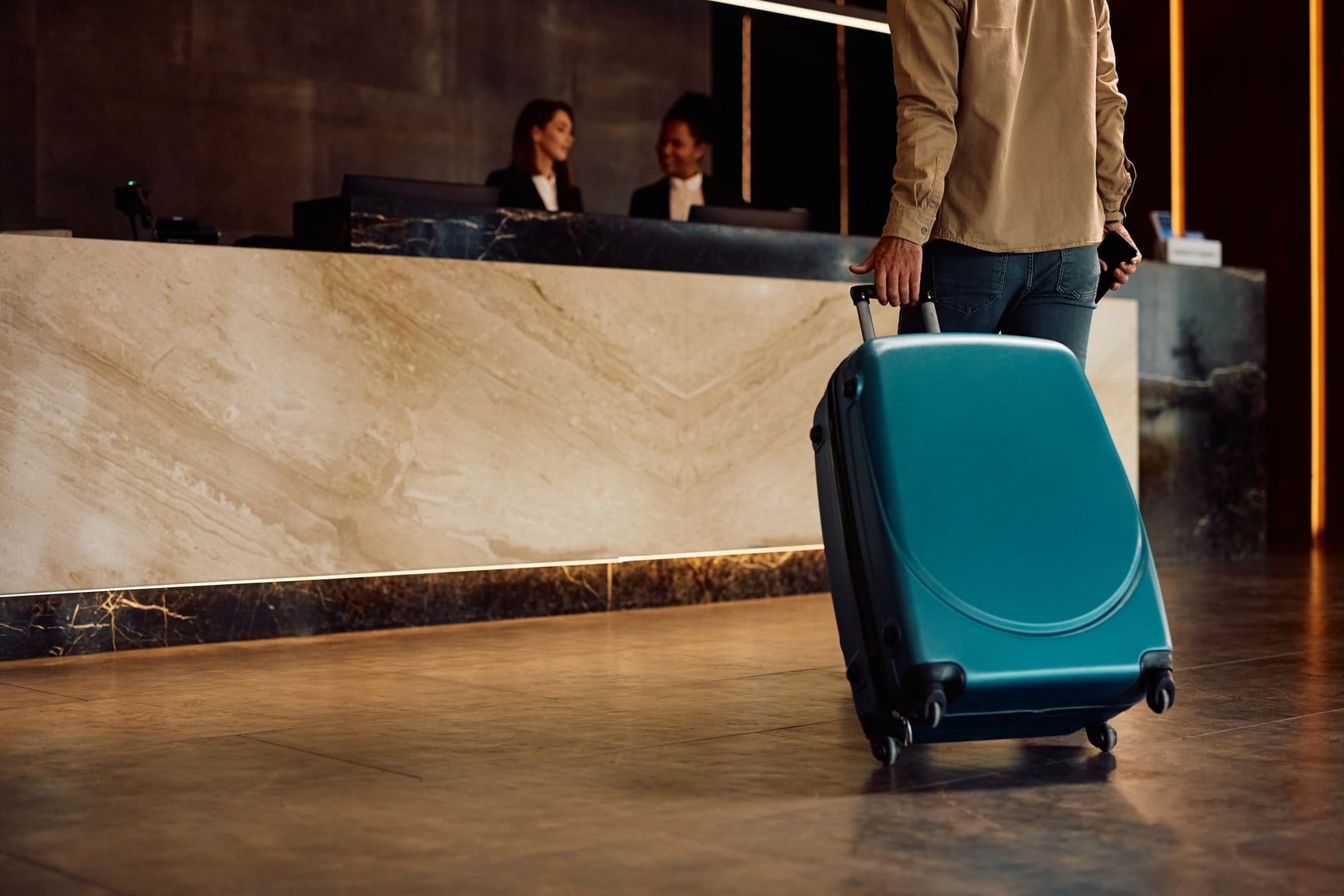
An owner searching for hotel insurance in South Dakota wants the state rules laid out first, and this page has to start by admitting a limit. The legislature’s statute pages answered our requests with an empty script shell, again on a second try, so we could not read the sections on lodging, alcohol service, workers’ compensation or motor vehicle liability. What we could read was a single agency page from the Division of Labor and Management. We use it for what it says and nothing more.
That makes this a thin page on law and a fuller page on the property. It sets out what a hotel in the state is exposed to, how the coverages in the hotel insurance program meet those exposures, and the questions worth putting to an agent before leaning on any of it. Every legal point we could not read is written as open, not as settled in either direction.
Reading South Dakota’s rules with the statute site out of reach
A thin record changes how a reader should treat each sentence here. Where the page quotes, the words sit between quotation marks and link to the page they came from. Where the page describes, it describes the hotel business, not the law. Where the law would normally appear, you will find a plain statement that we did not read it, so an owner is not left to wonder whether silence means permission or prohibition.
The list of what stays open is long, and it is better stated early. We did not establish how a hotel is licensed to receive guests. We did not find a civil statute on serving alcohol. We did not find an employee-count threshold for workers’ compensation, whether an owner may elect coverage, which kinds of insurer may write it, or whether the state runs a fund of its own. We did not retrieve an independent-contractor test. And the current minimum liability limit for a vehicle is not confirmed in our research. Each one is taken up in the sections below, in the place an owner would meet it.
None of this means the answers are hard to find. It means this page is not the place to find them. A statute that was unreadable to an automated fetch is available to a person at a library, a county office or an attorney’s desk, and an agent who writes hotels in the state will know which of these points the market asks about.
Where a hotel owner looks for the lodging license answer
We did not establish a lodging license route for South Dakota hotels. The page therefore does not say that a license is required, and it does not say that one is not. It does not name an office as the issuer either, because naming one would be a claim we cannot back.
What an owner can do is ask in the right order. Start with the city or county that governs the parcel, since local rules on occupancy, signage and inspections attach to the address whatever the state does. Ask the fire authority what it expects of a building with sleeping rooms, interior corridors and a kitchen. Ask the health authority about the pool and the food service. If the hotel is being bought, ask the seller for the file of approvals and the last inspection reports, and have an attorney read them.
The insurance link is straightforward. A policy is written for a described building at a described address with described activities. When a hotel adds rooms, converts a function room, opens a bar or builds a second structure on the lot, the approvals and the policy should both change. An agent who sees the approvals file can tell you early whether the program matches what the hotel is allowed to do.
Franchise properties have a second source of requirements. A brand’s standards reach well past local rules, covering life-safety equipment, guest-room condition and the liability the owner must carry. That document, not a statute, is the sharpest list of what the program must show, and it belongs in the file you send for a quote.
Staff coverage the labor division calls a choice
The one legal statement we can stand behind comes from the Division of Labor and Management. Its workers’ compensation page says that “There is no law in South Dakota requiring any employer to carry workers’ compensation insurance” (agency page, workers’ compensation). That is an agency’s description of the law, not the statute’s own text, and the record we hold says plainly that coverage is described there as a choice for employers.
Read carefully, that sentence is about a requirement and not about risk. A hotel employs people who work with wet floors, hot kitchens, laundry equipment, ladders, luggage carts and chemicals for the pool. An employee who is hurt on any of them can have medical bills and lost wages whether or not a statute told the employer to buy a policy. A workers’ compensation policy is the usual way an employer pays for that, and the policy page explains how it works for a hotel staff.
We did not find an employee-count threshold in the text we read, so we do not say that small hotels are in or out of any rule. Whether an owner may elect coverage for himself or herself is not confirmed in our research, so an owner who works the desk or cleans rooms during a staffing gap should ask the agent how the policy treats that work. We did not read which kinds of insurer may write the coverage, and we did not find a statement either way on whether the state runs a fund of its own. A hotel should not assume a state source for coverage exists, or that it does not; the agent can say which markets quote the risk.
There is a business reason to carry coverage even where the state does not insist. Lenders, franchisors and companies that book blocks of rooms or event space ask for proof of workers’ compensation in their paperwork. A hotel that cannot show it can lose the booking or the loan term, so the contract becomes the requirement the statute may not be.
Serving drinks: the civil question we leave open
We did not find a South Dakota civil server-liability statute in the text we read. We state no rule about whether a guest, or a person a guest harms, can bring a claim against a hotel that served alcohol. A reader should not take our silence as a safe harbor.
The exposure is easy to describe even when the statute is not. A hotel with a lounge, a restaurant, a poolside cart, a minibar or a banquet room that pours at weddings puts alcohol into guests’ hands in places where they then drive, fall or argue. A guest who leaves the bar and is hurt in the stairwell can raise a premises claim. A guest who leaves and injures a stranger on the road can bring a claim that names the hotel. Whether state law narrows or widens those claims is exactly the point we could not read.
What an owner controls is the way alcohol is served. A written service policy, staff who are trained to refuse, a record of refusals, a plan for getting guests to their rooms or a ride, and clear handling of outside caterers all help a hotel in a claim and with an underwriter. A liquor liability policy is the coverage written for claims that arise from serving, and the general liability policy for the hotel may exclude or limit that exposure in its own wording. Ask the agent to show the two side by side.
Events deserve a separate sentence. When a wedding party brings its own bartender or a company hires a caterer who pours, the license and insurance behind that service are a contract matter. Ask for the caterer’s certificate before the event and read whether your agreement asks the host to carry anything.
Hotel exposures that come from the place
A hotel’s exposure does not wait for the statute. A property on the plains meets wind, hail and heavy winter snow in ways a coastal hotel does not, and a property near a highway exit meets a steady flow of strangers arriving at all hours. We make no claim about how frequently any weather event occurs; the description is only that a building with a large roof, exterior stairs and a parking lot has to be maintained against such weather, and the policy has to be read against it.
Winter shapes the premises risk. A guest who slips on an icy entry walk or the parking lot edge is the classic premises claim, and a hotel’s snow removal routine, salt and sand on walkways, and the log of when each was done are part of the defense. A general liability policy is the coverage that answers those claims, and its wording decides how falls, pool injuries, food-service illness and parking-lot disputes are treated.
The building is the other large asset. A property insurance policy covers the structure, its fixtures, furnishings, linens and equipment, and an owner should ask how it handles lost income while rooms are closed after a loss. Hail on a roof, a burst pipe in a cold snap or a kitchen fire can close wings for weeks. The questions to ask are what the building is insured for, how that value was set, and what the deductible looks like for wind and hail, which some policies treat separately.
Other exposures follow from the amenities. A pool brings supervision, signage, gate and drain questions. A fitness room brings equipment and misuse claims. A breakfast room brings allergy and foodborne illness claims. A meeting space brings crowds, rented equipment and outside vendors. A hunting or fishing group, a sports team or a work crew may fill the house for a stretch, and the wear on rooms and the behavior of a large group are factors for the property and liability questions alike.
The van, the valet and the auto limit question
A hotel that runs a van to an airport or a bus station, parks guests’ cars or keeps a truck for maintenance has vehicle exposure that general liability does not pick up. We did not confirm the current state minimum liability limit in our research, so this page prints no amount. The current minimum is a question for the agent, and the page leaves it there on purpose rather than quote a figure from memory.
Whatever the state floor is, it is not the same as the limit a hotel should want. A van carrying several guests and their bags can produce a serious claim from a single incident, and a lender, franchisor or corporate client may ask for more than a statute does. A commercial auto policy is where those limits are set, so ask what the shuttle carries, who counts as a covered driver, and how the policy treats a guest who is hurt getting on or off the vehicle in the porte-cochère.
Staff who run an errand in their own car are a separate case. A hired and non-owned auto endorsement answers for the hotel’s liability when an employee’s personal vehicle is used on hotel business. A hotel that owns no vehicle at all can still need it, because the bank run, the supply pick-up and the airport trip for a stranded guest all happen in somebody’s car.
Valet service adds a bailment question. A guest hands over keys and expects the car back undamaged. Whether that exposure sits under the auto policy, the general liability policy or a separate coverage depends on the wording, so ask the agent where it lands before the valet stand opens.
Contract workers and the independent-contractor question
We did not retrieve an independent-contractor test for South Dakota. The agency page we read lists independent contractors only as a link title, with no test text behind it that we could read. This page therefore states no test.
The hotel version of the question is concrete. Housekeepers supplied by a staffing firm, a laundry crew that works on the property, a landscaper, a snow-removal contractor, a pool service and a security guard company all touch the guest experience. If one of those workers is hurt, or hurts a guest, the question of who pays begins with the contract and the certificates the contractor holds, not with a label on a form.
Good practice is the same regardless of the state’s test. Ask each contractor for a certificate of its own liability and workers’ compensation coverage, ask to be named as an additional insured where the work is on your premises, and keep the certificate current as it expires. When a contractor cannot produce a certificate, tell the agent, because the hotel may be carrying a risk it assumed was somebody else’s.
How the six policies line up for a South Dakota property
General liability carries the premises claims described above: the icy walk, the pool, the breakfast room, the lot and the guest who says a fixture failed. Property insurance covers the building, the contents and the income interruption. Workers’ compensation answers for employee injuries, and the labor division’s statement means the owner decides whether to carry it rather than being told to. Commercial auto covers the van and any hotel vehicle. Liquor liability follows the bar, the restaurant and the event hall. An umbrella policy adds a layer above the liability policies for the severe claim, and franchisors and lenders may ask for one.
Each coverage page goes deeper than this one. On this page the South Dakota text we read decides only one thing, which is that the labor division describes staff coverage as a choice for employers. Every other starting point is for the agent to confirm, and the agent should be asked about each by name: the license, the alcohol civil rule, the owner election, the insurer class, the contractor test and the vehicle floor.
It helps to ask the agent to write the answers down. A one-page note that lists each open point, who confirmed it and on what date turns a conversation into a record. When a lender, a franchisor or an underwriter asks later why the program looks as it does, that note is the answer.
Papers to gather before asking for a quote
A good deal of what a hotel program has to show comes from contracts, not statutes. A franchise agreement may list the coverages, set minimum limits and ask to be named on the policy. A lender will want its interest in the building recorded and the property insured to value. A wedding planner, a conference organizer or a corporate client may ask for a certificate naming their company before a deposit clears.
Gather the franchise agreement, the loan documents, your standard event contract, the last inspection reports and a description of every building and amenity. List the vehicles and who drives them, the alcohol service and the events, and the payroll roles and contract workers. Send them together with the quote request, so the certificate can state what each document asks on the first try.
Last, keep the open points on this page in front of the agent. The statute pages that would settle them exist; we could not read them, and a person can. When each point is answered, the program can be written around the answer instead of around a guess.